Table Of Content
Introduction
Yamunotri Dham is a sacred destination that holds deep spiritual value for millions of devotees across India. The majestic Himalayan ranges of Uttarakhand hold Yamunotri, which marks the origin point of the holy River Yamuna. Moreover, surrounded by snow-covered peaks, dense forests, and peaceful natural beauty, Yamunotri attracts pilgrims from all parts of the country. For many believers, visiting this holy shrine is not just a journey—it is a path towards inner peace and spiritual transformation.
Furthermore, the refreshing air, warm hospitality, and natural hot springs make the experience even more memorable. As a result, many devotees feel an instant sense of calm and positivity as soon as they reach the temple area. Whether you are a spiritual seeker or a nature lover, Yamunotri Dham offers a perfect blend of faith, adventure, and breathtaking beauty.
About Yamunotri Dham
Yamunotri Dham is one of the four sacred sites of the famous Char Dham Yatra—the other three being Gangotri, Kedarnath, and Badrinath. Hindu tradition teaches that these four temples open the doors to salvation. In Yamunotri, devotees worship Goddess Yamuna, who represents purity, protection, and life energy. The temple stands at an altitude of around 3,293 meters, making the journey both adventurous and spiritually uplifting.
The Dham is located near the Yamunotri glacier, the primary source of the Yamuna River. Although the actual source lies high in the mountains, devotees consider reaching the temple equivalent to visiting the true origin of the river. Devotees often drink the water from the Yamuna, believing that it brings good health and removes negative energy.
Mythological Significance of Yamunotri
Ancient Hindu mythology strongly connects Yamunotri with several divine stories. According to the scriptures, Surya Dev (the Sun God) and Yama (the God of Death) share a daughter named Goddess Yamuna. Moreover, devotees believe that taking blessings from Yamuna protects them from untimely death and helps them live a peaceful and prosperous life.
In addition, another story connects Yamunotri with the sage Asit Muni, who lived in the Himalayas and worshipped both the Ganga and Yamuna rivers. When he grew old and could no longer travel to the Ganga, people say that the river changed its course to give him darshan. Therefore, this story symbolizes the power of devotion and the divine nature of the river.
Historical Background
Maharaja Pratap Shah of Tehri Garhwal originally built the temple of Yamunotri. However, over the years, extreme weather conditions and natural calamities forced people to rebuild the temple several times. Despite these challenges, pilgrims continue their journey with faith and devotion.
Furthermore, the path leading to the temple reflects centuries of tradition, where people of all ages walk through narrow trails, deep forests, and rocky climbs. As a result, every stone on this route holds stories of devotion, making the journey emotionally powerful.
Geographical Beauty of Yamunotri
One of the most attractive features of Yamunotri is its unmatched natural beauty. The lush forests, flowing streams, and snow-covered mountains together create a stunning landscape. Moreover, the cool mountain breeze and peaceful environment provide visitors with a refreshing break from busy city life.
The river Yamuna flows beside the trekking route, adding both beauty and charm to the path. Consequently, pilgrims often stop during the trek to enjoy the scenic views and capture pictures of stunning waterfalls and green valleys.
Main Attractions at Yamunotri Dham
1. Yamunotri Temple
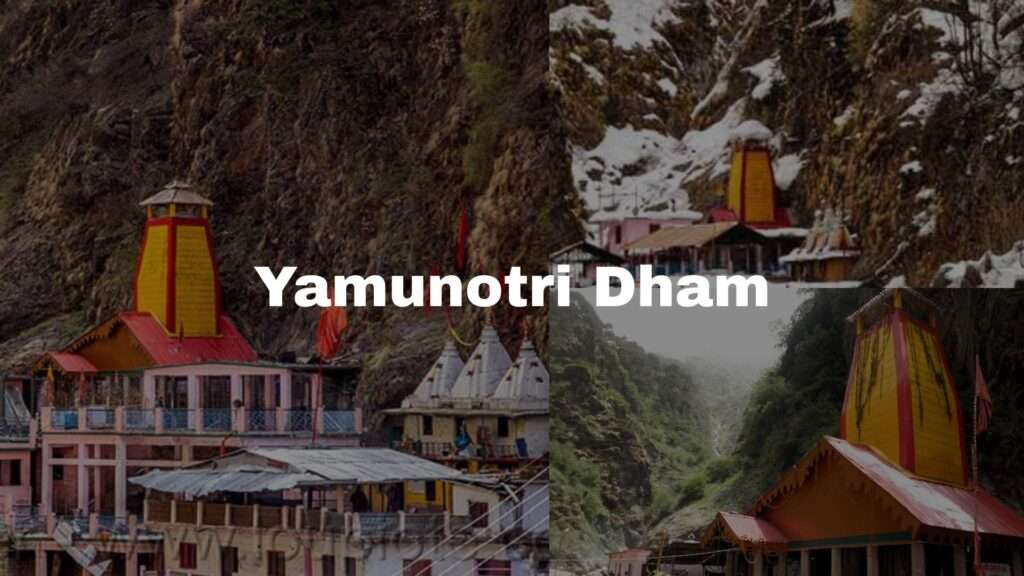
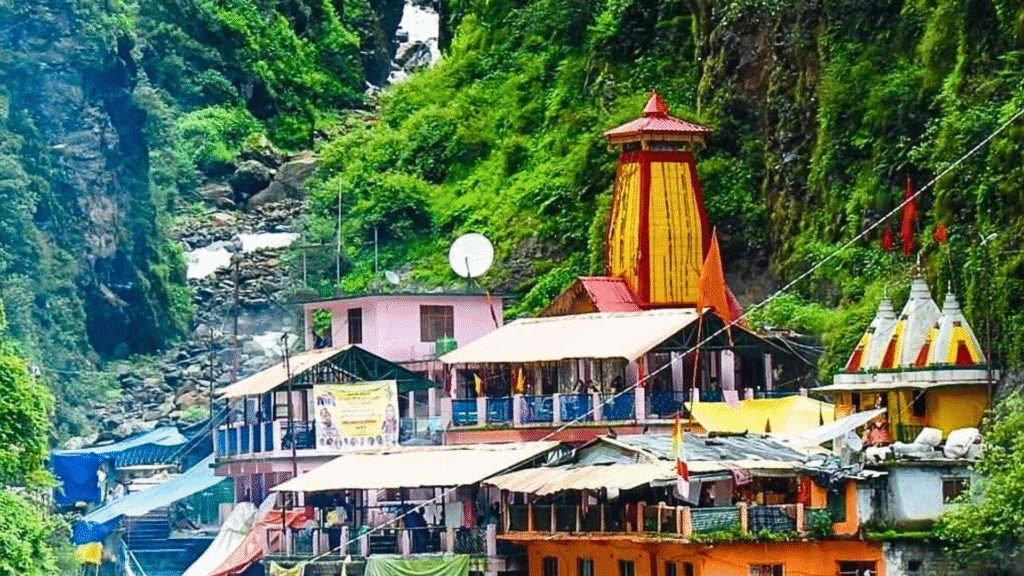
The main temple is simple and beautiful, built using traditional Himalayan architecture. Constructed primarily of granite and wood, the temple reflects the Garhwali style, featuring a distinctive yellow conical-shaped roof with elegant red borders. Inside the sanctum sanctorum, devotees adorn the black marble idol of Goddess Yamuna with flowers and colourful cloth, which helps it radiate a serene aura. Moreover, the peaceful environment around the temple makes it an ideal place for meditation and prayer, providing devotees a deep sense of spiritual calm and connection.
2. Surya Kund
Surya Kund is a natural hot water spring located near the temple. The water here is extremely hot, reaching temperatures up to 88°C. Devotees use this water to cook prasad, usually rice or potatoes tied in a muslin cloth. Moreover, the steam rising from the hot spring creates a magical view against the cold mountain backdrop, adding to the spiritual charm of the place.
3. Divya Shila
Before entering the temple, pilgrims worship the Divya Shila, a sacred stone located near Surya Kund. Devotees consider this ritual very important, and no one skips this step. They believe that the Divya Shila represents the divine presence of Goddess Yamuna, and they offer prayers here to purify their soul. Moreover, devotees often offer cooked prasad at this stone as part of the ritual before proceeding to the main temple, enhancing the spiritual experience of the pilgrimage.
4. Yamunotri Glacier
Although the glacier is difficult to access, it remains the true source of the Yamuna River. This glacier sits at an elevation of approximately 6,387 meters near the Bandarpunch peaks in Uttarakhand, surrounded by towering snow-covered mountains. Moreover, many travellers consider it one of the most beautiful glaciers in India, as it offers a pristine and awe-inspiring landscape that reflects the majesty of the Himalayas.
5. Trekking Route
The trek from Janki Chatti to Yamunotri is around 5–6 km. The path is filled with dense forests, rocky landscapes, and valleys. Ponies and palanquins are also available for those who cannot trek.
How to Reach Yamunotri Dham
By Road
The last motorable point is Janki Chatti. From there, visitors begin the trek to the temple. Roads from Rishikesh, Dehradun, and Haridwar are well connected to Janki Chatti.
By Train
Nearest railway stations:
- Dehradun
- Rishikesh
Both stations have regular transport services to Yamunotri route.
By Air
Nearest airport: Jolly Grant Airport, Dehradun
Taxi services are easily available from the airport.
Best Time to Visit Yamunotri Dham
The best time to visit Yamunotri is during May–June and September–October.
- Summers offer pleasant weather, making trekking easier.
- Monsoon months bring rain and landslides, so they should be avoided.
- Winters are extremely cold, and the temple remains closed due to heavy snowfall.
For more detailed travel guidelines, you can check the official Uttarakhand Tourism website
Accommodation Options
Nearby areas like Barkot, Janki Chatti, and Hanuman Chatti offer comfortable stay options. In these places, budget hotels, guesthouses, dharamshalas, and lodges are available depending on your preference. During the peak season, therefore, it is better to book rooms in advance to avoid any inconvenience.
Food and Local Cuisine
Pilgrims can find simple and hygienic food at various small restaurants and tea stalls. Popular items include:
- Roti and Sabzi
- Rice and Dal
- Maggi
- Tea and snacks
Since Yamunotri is a holy place, non-vegetarian food and alcohol are strictly prohibited.
Things to Carry
- Warm clothes
- Comfortable trekking shoes
- Raincoat
- Water bottle
- Power bank
- First-aid kit
- Sunglasses
- Extra socks
Carrying these items makes the journey safer and more comfortable.
Travel Tips for Pilgrims
- Start your trek early in the morning.
- Stay hydrated throughout the journey.
- Avoid travelling in monsoon due to landslides.
- Respect the environment and do not litter.
- Follow safety instructions given by local authorities.
- Check weather updates before leaving.
Conclusion
Yamunotri Dham is a beautiful blend of faith, nature, and peace. Moreover, the journey to this holy shrine allows devotees to experience the Himalayan beauty while connecting deeply with spirituality. Furthermore, whether it is the serene temple, the warm Surya Kund, or the breathtaking mountain views, every part of Yamunotri fills the heart with positivity. Consequently, visiting this sacred place is not just a religious trip—it is an experience that stays with you forever. The blessings of Goddess Yamuna, combined with the pure natural surroundings, bring peace, happiness, and strength to everyone who visits. Therefore, for anyone looking to explore spiritual India, Yamunotri Dham is a destination that should not be missed.
FAQ’S
Ans. Yamunotri Dham is located in the Uttarkashi district of Uttarakhand, in the western Himalayan region. It stands at an altitude of around 3,293 meters, and beautiful snow-covered mountains surround it from all sides.
Ans. Hindu tradition honors Yamunotri as a temple dedicated to Goddess Yamuna, who represents purity, protection, and life energy.
Ans. The trek to Yamunotri starts from Janki Chatti and is approximately 5–6 Km. The route includes steep climbs, narrow paths, and stunning natural views. Ponies and palanquins are available for those who cannot trek.
Surya Kund is a natural hot water spring near Yamunotri Temple. Devotees prepare prasad by tying rice or potatoes in a cloth and dipping them into the boiling water. This prasad is believed to be blessed by Goddess Yamuna.