Table Of Content
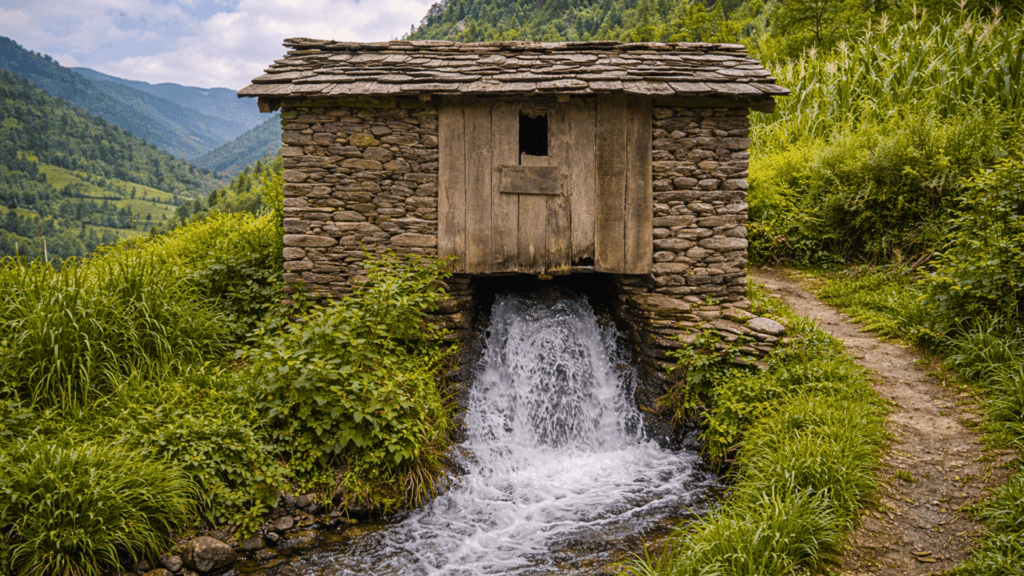
Gharaat Water Mills Uttarakhand
When we venture into the beautiful mountains of Uttarakhand, we often come across a small, stone-built structure resembling a room, situated along the banks of rivers and streams. Its roof is usually made of stone slabs, and sometimes the entire structure is built of stone. This is no ordinary hut, but a centuries-old lifeline of the mountains—the Gharaat Water Mills Uttarakhand,. It is also known as Panchakki. Long before engines or even electricity existed, our mountain ancestors understood the power of water. The Gharaat is not just a machine, but the greatest testament to the balance between mountain engineering and the environment. In this article, we will understand everything about the Gharaat in detail, from its complete history to its working mechanism.
What are Gharaat Water Mills Uttarakhand?
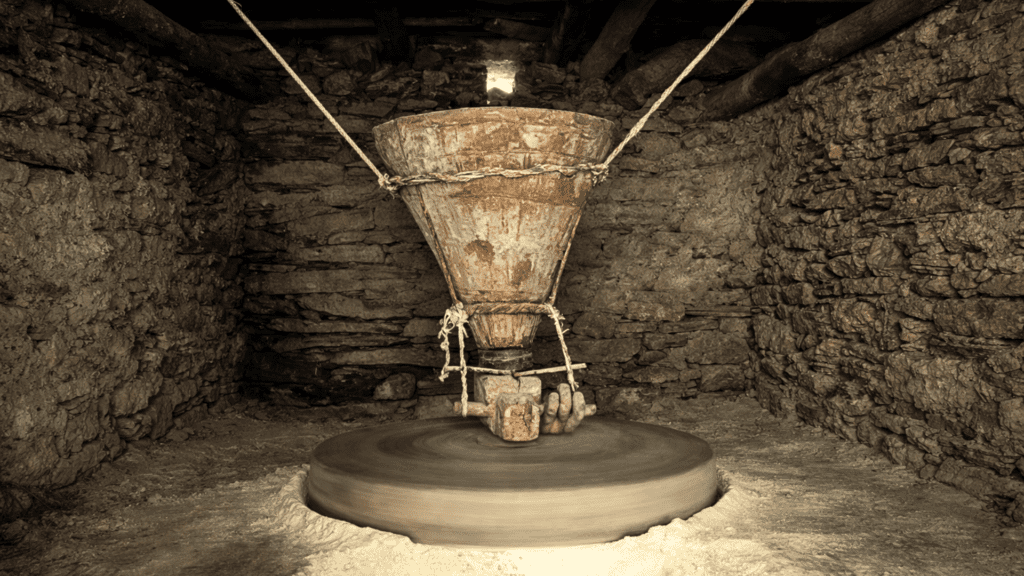
Simply put, ‘Gharaat’ means a water mill, or a mill powered by water. In the local hill language, the word ‘Ghar‘ is often associated with sound, because when this mill operates, the heavy grinding stones produce a distinctive ‘gharr-gharr’ sound. This is an indigenous technology that grinds grain using only the kinetic energy of flowing water, without any fuel or electricity.
The history of Gharaat: When, how, and by whom was it built?
The history of the Gharaat (watermill) is centuries old. It is said that Gharaat have been in use in Uttarakhand since approximately the 7th or 8th century. There is no single inventor; it is a product of the collective wisdom of our mountain ancestors.
- Who built it: It was built by local craftsmen and village elders working together. They observed that the water flowing down the mountain slopes possessed great power.
- How it was built: Building a Gharaat didn’t require a factory. It was constructed using local wood (pine or cedar), heavy river stones, and a bit of ingenuity, and then set up on the riverbank.
- Technology: It utilizes “horizontal water turbine” technology, which is an early form of the technology used in today’s large hydropower plants.
Before building a watermill, it is very important to understand its technique. If a watermill is built without proper technical knowledge, the water power may not be utilized effectively, and the watermill may not function efficiently.
How do Gharaat Water Mills Work?
Even today’s engineers are amazed by the engineering of the traditional watermill. Its working mechanism is described in the following steps:
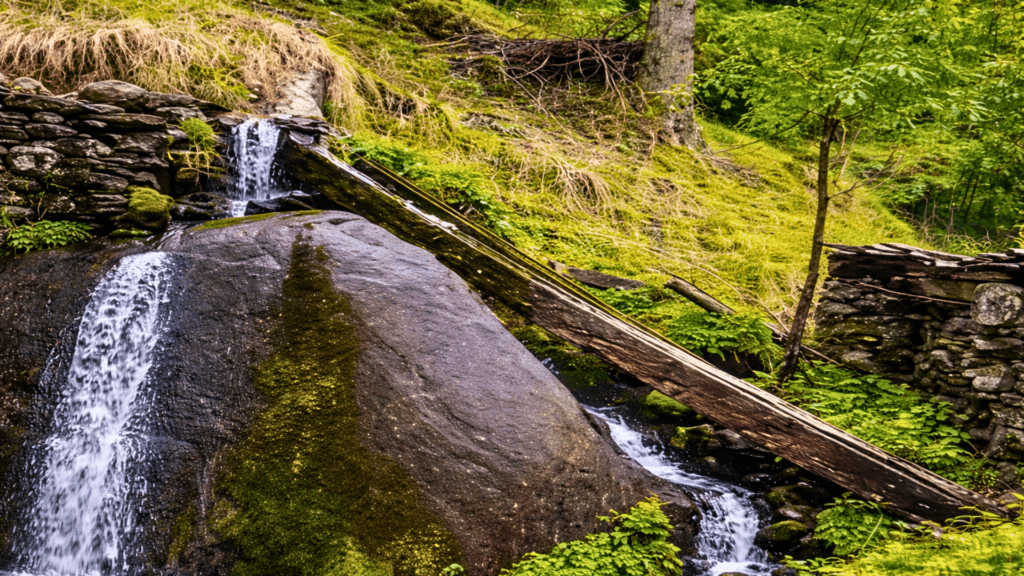
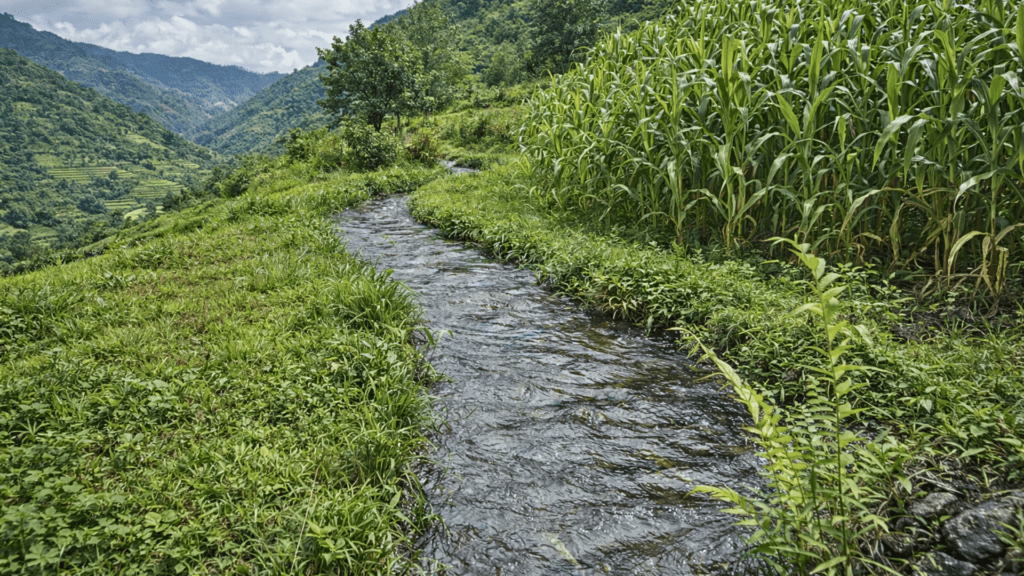
- Water Diversion (Kool): First, a small amount of water is diverted from the main river or stream through a small channel, which is locally called ‘Kool‘.
- Vertical Drop (Panala): This water is then made to fall rapidly through a large wooden channel (called Panala or पनियो). This increases the water pressure.
- The Turbine (Faryala): At the bottom, there is a wooden wheel with wooden blades, called ‘फ़ार्याला or चक्का’. When the water falls rapidly onto it, it starts rotating.
- The Grinding Stones (पाट): A metal rod connects the top of the Faryala to two heavy grinding stones (Paat) in the room above. As the turbine rotates, the upper stone rotates, while the lower stone remains stationary (fixed).
- The Secret of the Stones: Not every stone can be used here. Craftsmen specially select hard mountain stones that don’t wear away easily, ensuring the flour is pure and free from sto
- Grain Feed (राडी or रोड): A wooden box (राडी), made of bamboo and mud, holds the grain and prevents it from spilling. From this box, the grains slowly fall between the grinding stones, which grind them into fresh flour.
What do the locals grind and what are the charges?
At the mill, not only wheat is ground, but every major grain of the Pahari (mountain) diet is processed here:
- Mandua (Finger Millet): Without which a Pahari meal is incomplete.
- Jau (Barley): Which is excellent for health.
- Makki (Corn): For making corn flatbreads in the winter.
- Gahat and Bhatt: It is also used for grinding pulses.
Charges (Milling Method): In the olden days, the owners of the watermills (Gharaati) did not charge money. A barter system was in place. If you mill 10 kg of grain, you give a small portion (approximately 5-10%) to the mill owner as payment. Locals call this system ‘Bhagwari’. This tradition continued in many places until a few years ago, although at that time some people had started charging nominal cash fees (₹5-₹10 per kg).
However, as modern times arrived, people started using electric flour mills, and in many places, due to water scarcity, people stopped going to the watermills. Now, most of the watermills are in a dilapidated condition.
Benefits of Gharaat Water Mills Uttarakhand
- Nutritional Value: The biggest advantage is that the watermill grinds very slowly. Unlike electric mills, it doesn’t heat the grains. This preserves the natural vitamins, minerals, and fiber in the grain. The resulting flour has a distinct and sweet taste.
- Eco-Friendly: Zero carbon emissions. It requires no fuel or electricity. It is 100% natural.
- Employment: It provided a source of employment for people in the villages.
- Long Life: Once set up, a watermill can last for centuries, requiring only minimal maintenance.
Learn More:- Uttarakhand Complete Travel Guide
Conclusion
Gharaat is not just an old technique from Uttarakhand, but a vital part of our culture and the mountain way of life. It teaches us how to fulfil our needs without harming nature. Many Gharaats have stopped functioning years ago due to the advent of new technologies, and nowadays, small flour mills are available in almost every home. However, if Gharaats disappear completely, we will lose not only a tradition but also the pure, nutritious, and natural taste that helped boost our immunity.
FAQ’s
Ans. The slow-grinding process keeps the flour cool, preserving all its natural nutrients and taste.
Ans. Yes, an upgraded Gharaat can produce 3-5 kW of green energy for local use.
Ans. Usually, it’s not cash but 5-10% of the flour (called ‘Bhag’) given to the owner.
Ans. Simple—‘Pan’ means water and ‘Chakki’ means mill. It runs 100% on water.
Ans. Mainly due to drying streams, village migration, and competition from fast electric mills.