Table Of Content
When the cool breeze touches your face on the mountaintops and all you see is lush greenery all around, it feels like nature has given us its greatest gift. In Uttarakhand, we call these ‘green carpets’ Bugyals. But sadly, today we are witnessing The Silent Death of Our Bugyals is a reality we can no longer ignore, and these paradise-like mountains are slowly disappearing.
Whenever I trek to a new Bugyal, more than peace, a fear lingers in my mind—will this greenery still be here the next time I visit? Or will the silent death of our Bugyals erase everything?”
What are Bugyals? (The Lungs of the Himalayas)
Many people think that Bugyals are just meadows where you can take nice photos. But the truth is, Bugyals are the “lungs” of the Himalayas. These are delicate ecosystems found at altitudes of 3000 to 4000 meters, which have developed over thousands of years.
The grass here is not just fodder; it absorbs rainwater and sustains the natural springs that provide water to the villages below. These meadows are home to medicinal herbs found nowhere else in the world. If these Bugyals disappear, the entire water system of Uttarakhand will be disrupted, and in fact, contaminated water has already been found in some areas as recently as 2026.
The Impact of Over-Trekking
These days, everyone wants to be a “traveller,” but our mountains are bearing the brunt of this trend. When so many people walk around in the same area wearing heavy trekking boots, the delicate grass dies because the grip on the boots tears it up.
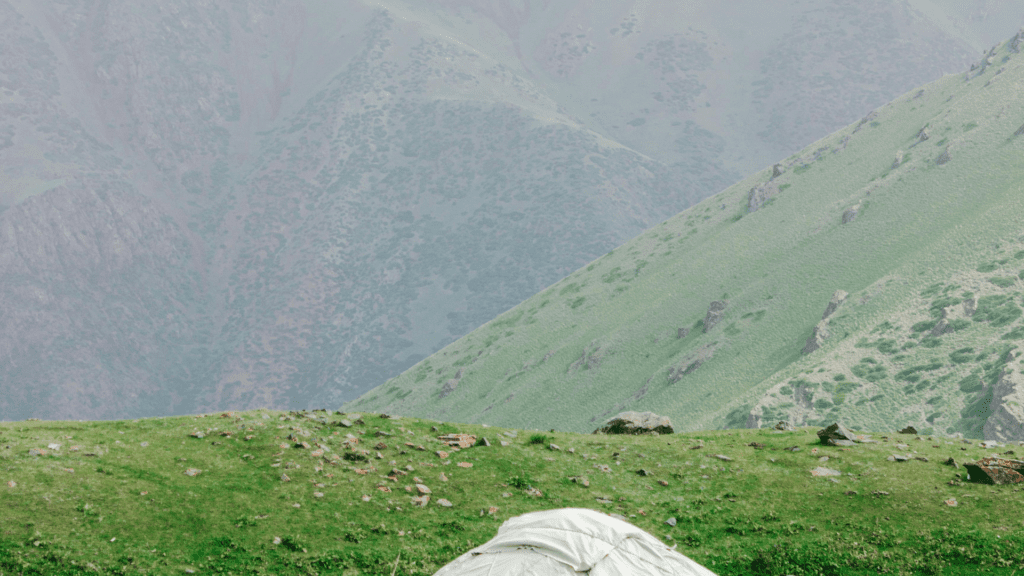
The biggest threat is ‘commercial camping.’ When tents are pitched repeatedly in the same spot, the ground becomes compacted, preventing grass from growing. This is exactly how The Silent Death of Our Bugyals starts. I’ve seen firsthand places where flowers once bloomed, but now only bare soil and rocks remain because the crowds of trekkers haven’t given the grass a chance to regrow, pushing us closer to The Silent Death of Our Bugyals.
The Plastic Menace: The Ugly Side of Tourism
It breaks my heart to see that the very places where we go to find peace and tranquility are the ones we leave littered with trash. At an altitude of 12,000 feet, where there should only be snow and serenity, people have now scattered Maggi cups, plastic bottles, and chips packets.
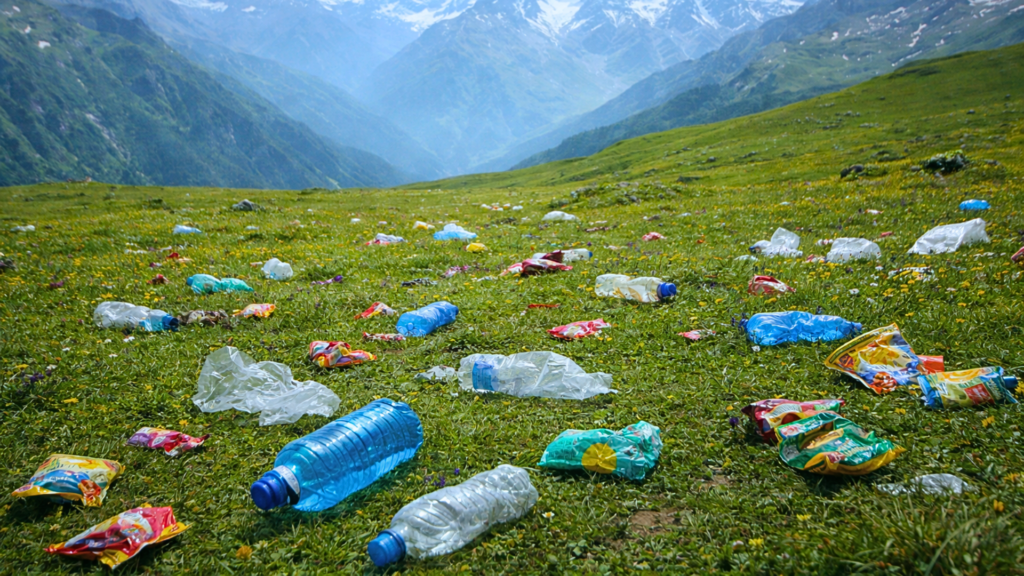
This plastic doesn’t just look unsightly; it’s also breaking down in the soil and harming the small creatures that live there. On my last trek, I carried down about 1 kg of trash, but the question is, how long will we keep cleaning up the mess others have created?
Soil Compaction: When the Earth Suffocates
When thousands of people use the same trail, the soil becomes compacted, turning as hard as rock. As a result, rainwater cannot penetrate the soil, leading to soil erosion.
The soil, which should be soft and fertile, has become so hard that new plants can no longer grow there. This is a type of damage that may take several decades to repair.
Party Above the Nature, Killing the Ground Below
A new trend is emerging among today’s youth—whether boys or girls, they find more enjoyment in drinking in the mountains and open areas than within the four walls of their homes. During treks, people don’t come seeking peace and tranquillity, but rather to experience an “open-air bar.” In their intoxicated state, these people forget their responsibilities and leave behind scattered cigarette butts, plastic glasses, and liquor bottles. This irresponsible behaviour is not just a bad habit, but has become a major threat to our environment.
It is most disheartening when people, in jest, smash glass bottles against rocks. This broken glass mixes with the soil and becomes a death trap for innocent animals (wildlife) grazing there. Plastic glasses and packets destroy the fertility of the soil, and shards of glass injure the animals’ paws. The very people who claim to “love” nature are the ones who turn it into a “dustbin” before returning home, thinking that someone else will clean up their mess.
The Silent Victims: Wildlife in Distress
Bugyals are not just tourist destinations, but also home to Himalayan animals like the Monal and Musk Deer, and many other creatures. When we play loud music and litter there, we turn their peaceful existence into a death trap. Noise pollution forces them to abandon their homes, and the plastic we leave behind ends up in their stomachs, killing them. Remember, we are “guests” there, not the “owners” of their home.
Displacement: Why Wildlife is Entering Our Villages
These days, we often hear in the news that leopards, bears, or tigers are roaming in villages and cities. Have you ever wondered why this is happening? The biggest reason is the destruction of the Bugyals (high-altitude grasslands). Bugyals are not just grasslands; they are the true home of these animals.
When we turn their habitat into party hubs and disturb the peace there, their homes are destroyed. In search of food and peace, these animals are forced to move towards our villages. We are taking away their homes, which is why they are appearing in our homes. If we don’t protect their ‘safe zone’ (Bugyals), this conflict will become even more dangerous.
How to be a Responsible Traveller? (My Request to You)
I’m not saying stop travelling. But as “responsible travellers,” we all have certain responsibilities. If we don’t wake up today, tomorrow our children will only be able to see the Bugyals (alpine meadows) in photographs.
- Leave No Trace: We should bring back the wrappers of all the food and drinks we take with us. Don’t leave even a single small wrapper behind.
- Stay on the Trail: Don’t trample on the fresh grass by taking shortcuts. Stick to the established paths.
- Say No to Loud Music: The mountains are for peace and tranquillity, not for partying. The wildlife there is scared of your noise.
- Respect the Local Culture: Listen to the advice of the local people; they know these mountains better than we do.
Conclusion
These meadows of Uttarakhand are our heritage, entrusted to us by our ancestors. But today, we have reduced them to mere ‘photo spots’ or ‘party hubs.’ We need to understand that we are guests there, not invaders.
If we don’t start taking our trash back with us and respecting these meadows today, future generations will be left with nothing but barren land and plastic waste. Let’s work together to restore the fragrance of these verdant landscapes, save the Himalayas, and stop The Silent Death of Our Bugyals before it’s too late.
FAQs
Ans. Bugyals are Himalayan grasslands located at an altitude of 3000-4000 meters.
Ans. It’s true that today’s tourists are badly harming the Bugyals by littering everywhere and destroying the natural beauty of the mountains.
Ans. Setting up tents repeatedly in the same spot causes the ground to become hard like rock, preventing new grass from growing. As a result, the soil cannot absorb rainwater, increasing the risk of landslides.
Ans. We have destroyed the animals’ habitat in the meadows by partying and making noise. They are now forced to come to our villages and cities in search of food and peace.