Introduction
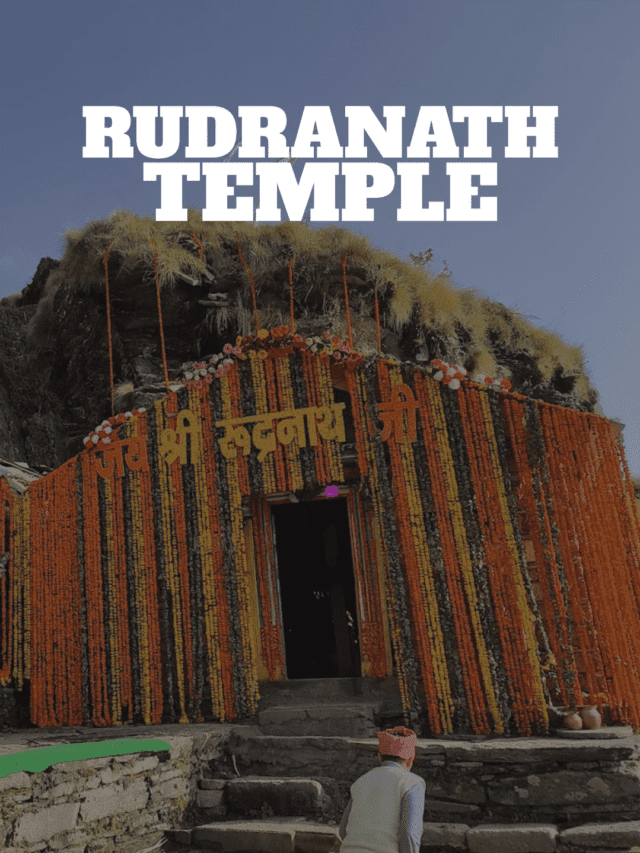
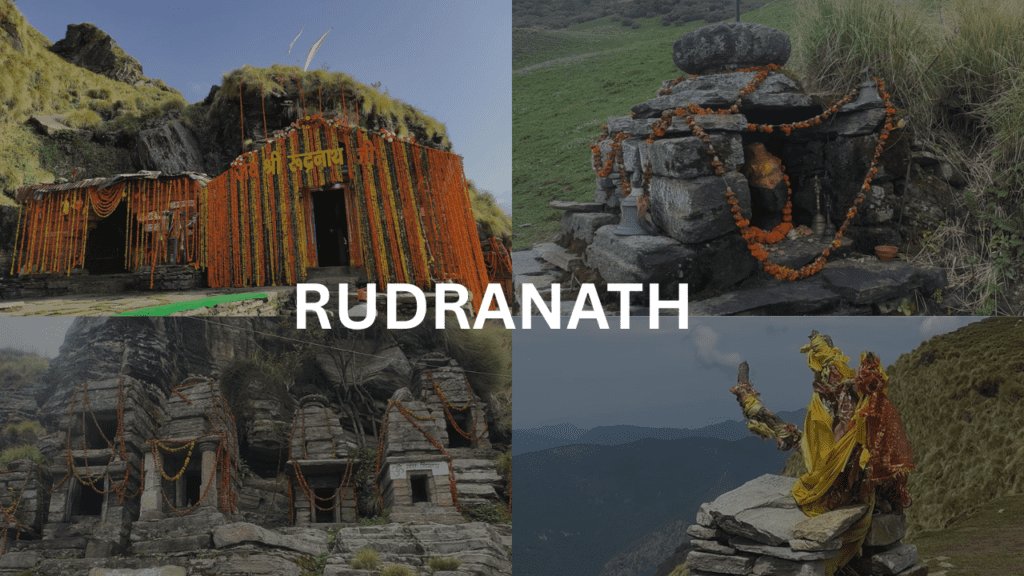
Rudranath Temple uttarakhand, is one of the holiest and most mystical temples dedicated to Lord Shiva in the Garhwal Himalayas of Uttarakhand. Located in the Chamoli district, this ancient temple is part of the revered Panch Kedar circuit, which holds profound spiritual significance in Hindu tradition. Unlike many popular pilgrimage sites, Rudra Nath Temple is serene, remote, and deeply connected to nature.
Rudra Nath Temple in Uttarakhand is known for its high altitude, beautiful meadows, and the long but rewarding trek to reach it. Devotees believe this is the place where Lord Shiva’s face manifested after the Mahabharata war. Because of its spiritual depth and unspoiled environment, Rudra Nath attracts pilgrims seeking peace, devotion, and a profound connection with the Himalayas.
Where is Rudranath Temple Located?
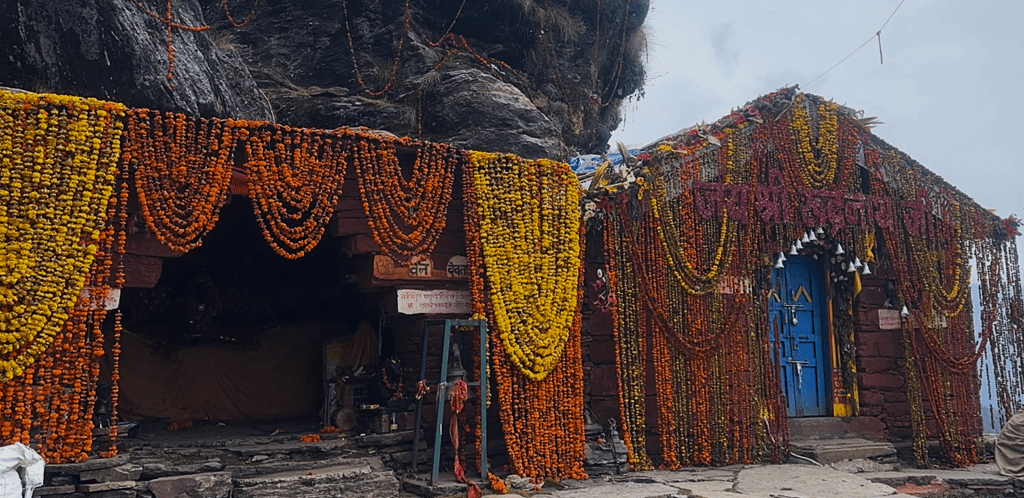
The Rudranath Temple is located in the Chamoli district of Uttarakhand, at an altitude of approximately 3,600 meters above sea level. Situated amidst alpine meadows and dense forests, it is one of the most remote of the Panch Kedar temples.
Moreover, Gopeshwar is the nearest major town and serves as the base camp for most pilgrims. From there, travellers begin a long trek to reach in Rudranath Temple Uttarakhand. Because of its high altitude, the temple remains closed during the winter months.the
Meaning and Origin of the Name Rudranath
The name Rudranath is derived from two Sanskrit words: Rudra, meaning the fierce form of Lord Shiva, and Nath, meaning lord or master. Together, Rudranath signifies the powerful and divine form of Shiva worshipped in the Himalayas.
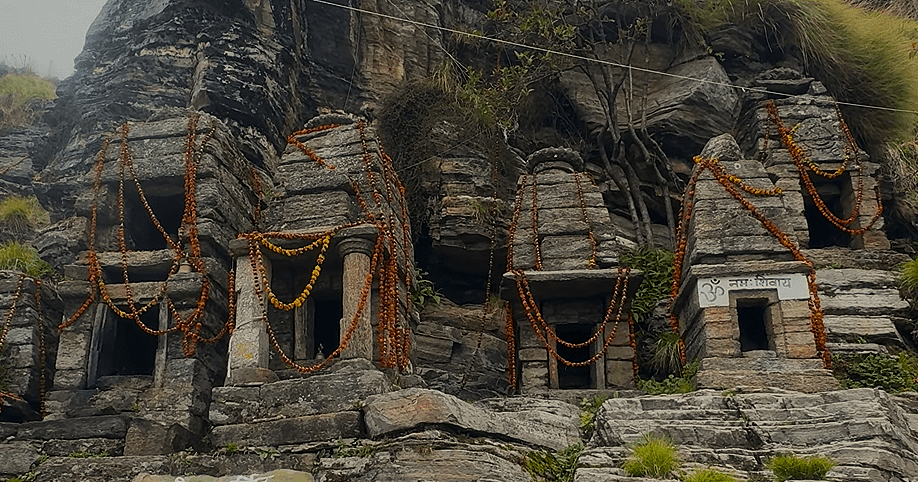
According to legend, Lord Shiva manifested his fierce form at this location. Therefore, the Rudranath temple in Uttarakhand holds special significance among devotees of Shiva.
Rudranath Temple and the Panch Kedar Legend
Rudra Nath Temple in Uttarakhand is one of the five Panch Kedar temples, which include:
- Kedarnath
- Tungnath
- Rudra Nath
- Madhyamaheshwar
- Kalpeshwar
According to Hindu mythology, after the Mahabharata war, the Pandavas sought forgiveness from Lord Shiva. Shiva, in the form of a bull, tried to evade them and disappeared into the ground. Different parts of his body reappeared at five different locations, which later became the Panch Kedar temples.
At Rudra Nath, devotees worship Lord Shiva’s face. For this reason, Rudra Nath is considered one of the most spiritually significant sites in the Panch Kedar circuit.
History of Rudranath Temple Uttarakhand
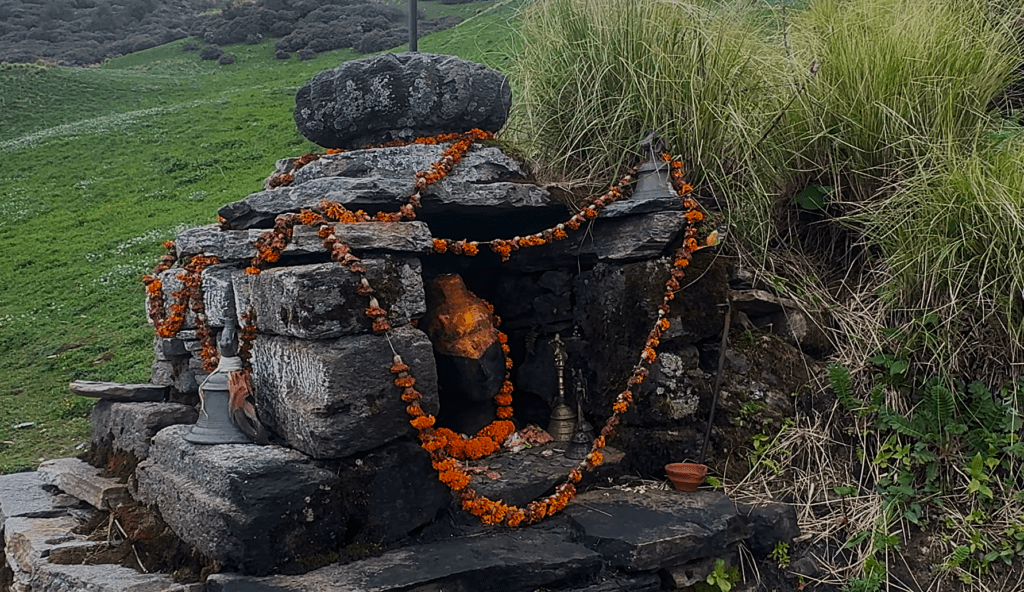
The Rudranath Temple in Uttarakhand has a history spanning several centuries. Although no precise historical records exist, local traditions suggest that sages and ascetics have been worshipping here since ancient times.
Many historians believe that Adi Shankaracharya played a significant role in reviving the worship of Shiva in this region, including at Rudranath. Over time, the temple became an important stop for wandering ascetics and pilgrims following the ancient Himalayan spiritual paths.
Spiritual Significance of Rudranath Temple
The Rudranath Temple in Uttarakhand is considered a powerful place for spiritual purification. Devotees believe that worshipping here dispels inner fears and brings peace of mind.
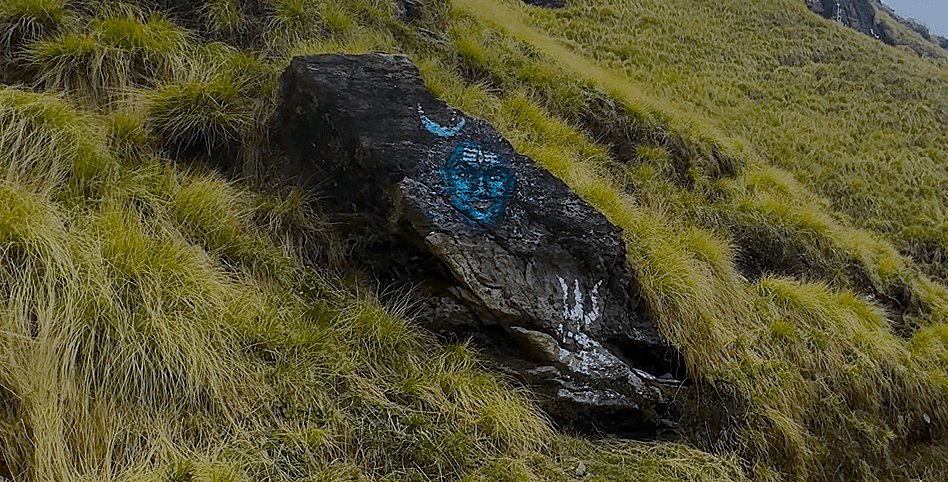
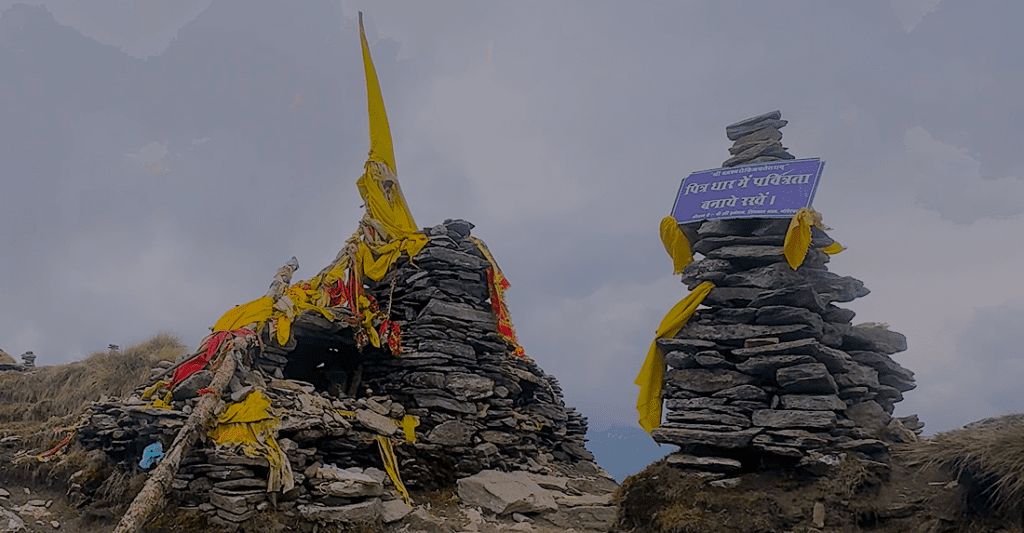
The tranquillity of the surrounding meadows and the gentle sounds carried on the breeze create an ideal atmosphere for meditation. Therefore, many describe their visit to Rudranath as a profoundly transformative experience.
How to Reach Rudranath Temple Uttarakhand
Reaching Rudranath Temple requires careful planning due to its remote location.
By Road
Travelers can reach Gopeshwar via Rishikesh and Chamoli. From Gopeshwar, pilgrims proceed to the starting points of the trek.
By Train
The nearest railway station is Rishikesh. Buses and taxis are available from there to Gopeshwar.
By Air
The nearest airport is Jolly Grant Airport, Dehradun. From Dehradun, travelers will have to travel to Gopeshwar by road.
Best Time to Visit Rudranath Temple Uttarakhand
The temple opens during the summer months and closes in winter due to snowfall.
- May to June: Pleasant weather, ideal for trekking
- July to September: Green landscapes but slippery trails
- October: Clear views before winter closure
Winter visits are not possible as the temple remains closed.
Detailed Trek Routes to Rudranath Temple Uttarakhand
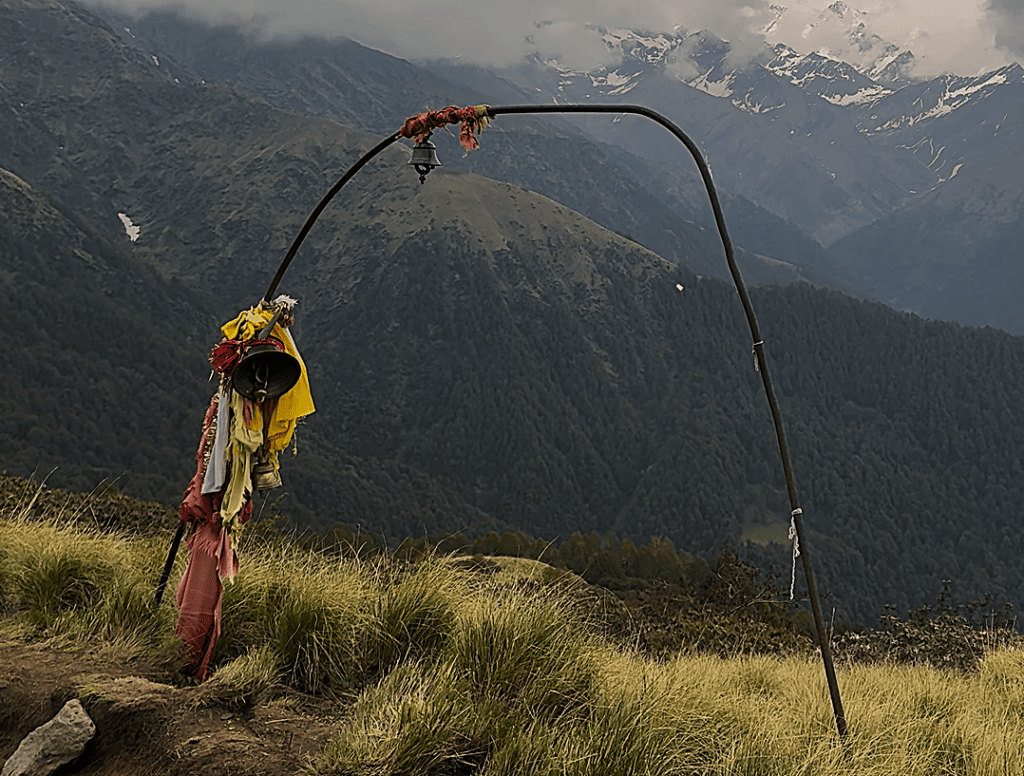
Reaching the Rudranath Temple in Uttarakhand requires dedication and physical exertion, as the temple is located deep within the high Himalayan mountains. However, the journey itself is considered a spiritual experience.
Sagar Village Route (Most Popular)
The Sagar village route is the most frequently used path to reach the Rudranath Temple. The trek begins from Sagar village, which is approximately 5 km from Gopeshwar.
- Trek Distance: Approximately 20 km (one way)
- Difficulty Level: Moderate to Difficult
- Route Highlights: Forest trails, mountain peaks, alpine meadows, and stunning views
Pilgrims typically stop at Panar Bugyal before continuing towards the temple. This route is well-marked and is preferred by first-time trekkers.
Mandoli Village Route
The Mandoli route is longer and more challenging than the Sagar route. It is mostly chosen by experienced trekkers.
- Trek distance: Approximately 24 km
- Terrain: Steep climbs and forest trails
- Best suited for: Experienced trekkers and adventure enthusiasts.
Panar Bugyal Route
This route passes through the beautiful high-altitude meadows of Panar Bugyal. It offers stunning views of the Himalayas.
- Scenic beauty: Excellent
- Trek difficulty: Medium
- Best suited for: Nature lovers and photographers
Weather Conditions at Rudranath Temple
Weather plays a crucial role when planning a trip to the Rudranath Temple in Uttarakhand.
- Summer (May-June): Days are cool and nights are cold, ideal for trekking.
- Monsoon (July-September): Lush greenery all around, but the trails can be slippery.
- Autumn (October): Clear skies and cool weather before the temple closes for the season.
- Winter (November-April): Heavy snowfall, the temple remains closed.
Therefore, it’s essential to check the weather forecast before your trip.
Accommodation and Food Options
Due to its remote location, accommodation near Rudranath Temple Uttarakhand is basic.
Stay Options
- GMVN guest houses at Gopeshwar
- Local homestays in Sagar and Mandal villages
- Temporary shelters during yatra season
Food Availability
- Simple vegetarian meals
- Tea and basic snacks at small dhabas
- Limited options beyond base villages
Visitors should carry dry food and water bottles during the trek.
Best Time to Visit Rudranath Temple Uttarakhand
The best time to visit Rudranath Temple Uttarakhand is between May and October.
- May–June: Ideal trekking conditions
- July–August: Green landscapes with caution
- September–October: Clear weather and fewer crowds
Winter visits are not possible due to heavy snowfall.
Why Rudranath Temple Uttarakhand is Special
Rudranath Temple Uttarakhand stands apart due to:
- High-altitude location
- Face form of Lord Shiva worship
- Challenging yet scenic trek
- Peaceful environment
It attracts pilgrims who seek both devotion and adventure.
Conclusion
Overall, Rudranath Temple Uttarakhand stands as a strong symbol of faith, endurance, and harmony with nature. Moreover, as one of the sacred Panch Kedar temples, it holds deep spiritual importance for devotees of Lord Shiva. Therefore, the challenging trek, peaceful surroundings, and ancient traditions together make this pilgrimage truly unforgettable.
For those seeking peace, devotion, and a profound spiritual experience in the Himalayas, the pilgrimage to Rudranath Temple is an experience that will forever be etched in their memories.
FAQ’s
Ans. Rudranath Temple is located in the Chamoli district of Uttarakhand, at an altitude of approximately 3,600 meters.
Ans. The face of Lord Shiva is worshipped at Rudranath Temple.
Ans. Yes, Rudranath Temple is one of the five sacred Panch Kedar temples in Uttarakhand.
Ans. The trek is considered moderately difficult and requires good physical fitness.
Ans. Depending on weather conditions, the temple is usually open from May to October.