Table Of Content
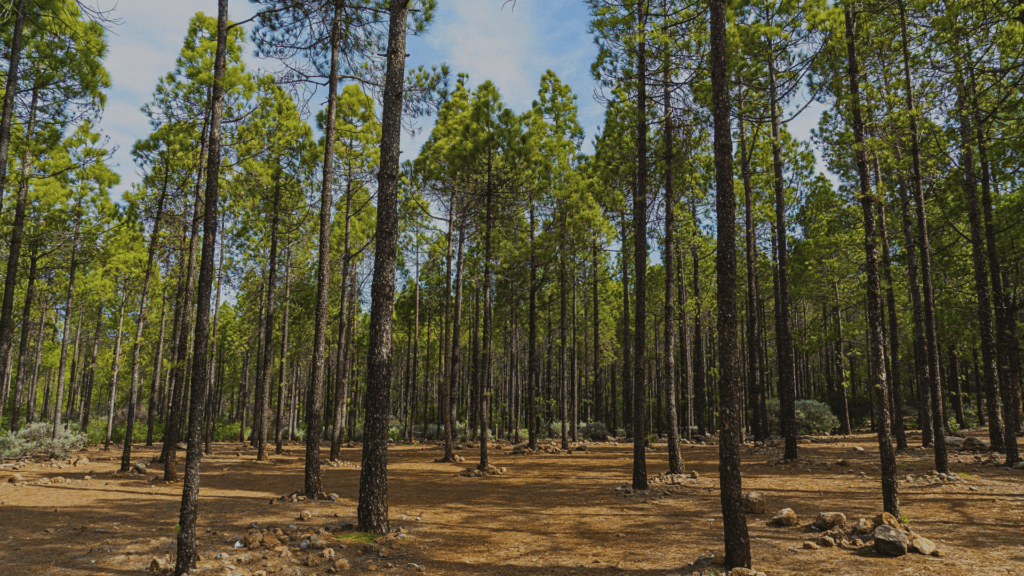
Pine Trees: The Green Desert of the Himalayas
Introduction: The pain hidden behind this greenery?
Whenever we head towards the mountains of Uttarakhand, the lush green forests look beautiful. But behind this greenery lies a serious environmental concern: the Pine Trees Threat. Many experts believe that this Pine Trees Threat is turning our hills into a ‘Green Desert’. Have you ever noticed that no small plants grow beneath those tall pine trees?
The purpose of this article is not to demonize any particular tree, but to bring to light a harsh truth that environmental experts call a “Green Desert.” We will learn how a seemingly “beautiful” tree is becoming a threat to our drinking water, biodiversity, and culture.
Pine trees: A silent attacker
Chir pine, known as Pinus roxburghii in English, can be found in almost every corner of Uttarakhand. This tree is very hardy, meaning it can grow even with little water and in poor soil. It is most commonly found at altitudes of 1000 to 2000 meters. However, it wasn’t the original dominant tree of this region , the British promoted this tree during their era to fulfil their need for resin and timber. Today, it is gradually displacing our native Himalayan trees, such as the Oak (बांज).
Why Cheed is a Threat?
This tree poses three major threats to our ecosystem:
- The Problem of ‘Pirul’ (The Carpet of Death): The pine needles, which are sharp and hard, fall to the ground and form a layer that never decomposes. As a result, rainwater cannot penetrate the soil, and no grass or shrubs can grow beneath it.
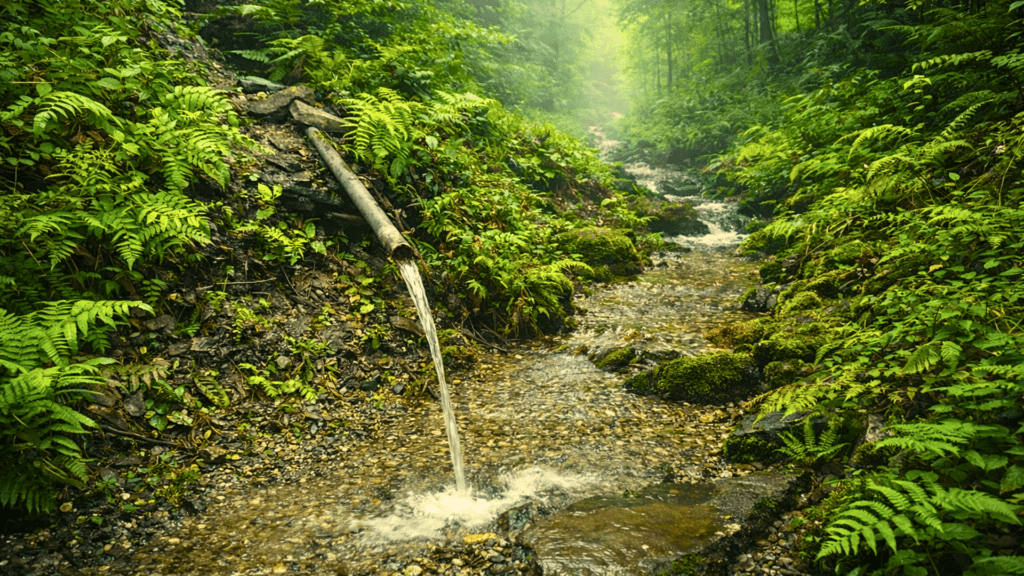
- Water Sucker (Enemy of Springs): While oak trees retain water and keep underground springs alive, pine trees rapidly absorb water. The expanding pine forests are a major reason for the drying up of springs in Uttarakhand.
- The Fuel for Forest Fires: Pirul (pine needles) contains resin, which acts like oil. In the summer, even a small spark can turn these forests into an inferno. These fires are so devastating that our valuable animals, birds, and even small plants are reduced to ashes.

Impact on Water Sources & Springs
In the mountains, the biggest source of water is natural springs (नौला और धारा). However, a few years ago, there was plenty of water, but as time has passed and the number of pine trees has increased, the water sources have drastically diminished in just a few years. Pine trees absorb a lot of water, and the dry needles (पिरुल) that fall beneath them prevent water from seeping into the ground. As a result, rainwater runs off instead of replenishing the groundwater, which is having a significant impact on drinking water and daily life.
Are Pine Trees Responsible for Landslides in the Himalayas?
It is generally believed that trees prevent landslides, but in the case of pine trees, the story is a little different. This is why the Pine Trees Threat is linked to increasing landslides in uttarakhand:
- Shallow Roots vs. Deep Roots: Oak and Deodar trees have roots that penetrate deep into the ground, effectively binding the soil and stabilizing the slopes. In contrast, pine trees have shallow roots that spread only on the surface. During heavy rains, these trees fail to hold the soil and often fall along with the soil, exacerbating the landslide.
- Soil Erosion and Slippery Slopes: The layer of pine needles (Pirul) covering the ground exposes the soil. Instead of being absorbed into the soil, rainwater flows rapidly over the pine needles. This surface runoff washes away the fertile topsoil of the mountains, weakening the slopes and increasing the risk of landslides.
How much area is covered by pine trees in Uttarakhand?
According to an estimate, pine trees account for approximately 16% to 20% of Uttarakhand’s total forest cover, covering an area of about 3,800-4,000 square kilometers. This is a cause for concern because this area is increasing every year, while our mixed forests (comprising oak, rhododendron, and deodar) are shrinking.
Are there any Benefits?
Everything has two sides. While pine trees can cause harm, they also have some benefits that help the local economy:
- Resin (Lisa): Resin is extracted from this tree and is used in paints, varnishes, and medicines. Many people sell it, but it’s not the local people of Uttarakhand who extract the resin; people from outside the region come to do it.
- Timber (Wood): Its wood is light and inexpensive, making it useful for building houses and furniture. People also often use its dry branches for firewood.
- Electricity from Pine Needles: Uttarakhand has now introduced a technology that generates electricity from fallen pine needles. This will also help reduce forest fires and provide employment opportunities for people.
The Solution: Humein ab kya karna chahiye?
To save the Himalayas, we need to change our “Forest Management” practices:
- Stop Monoculture: Instead of planting only pine trees, we should plant trees like oak and rhododendron. People do plant them, but after some time, these saplings dry up because the pine trees cause a water shortage in the area, and the other plants wither.
- Community Participation: We also need to ensure that trekkers and travelers are careful not to accidentally start forest fires during the summer months.
Read More:- Uttarakhand The Complete Travel Guide
Conclusion
The pine tree itself isn’t bad, but its uncontrolled growth has created a serious Pine Trees Threat for our ecosystem. To save our drying streams and stop landslides, we must replace this ‘Green Desert’ with native trees like Oak. Our greenery shouldn’t just be for show; it must sustain life. Addressing the Pine Trees Threat now is the only way to ensure a safe and green future for the Himalayas.
FAQ
Ans. Yes, this is an old tree, but previously it only grew at certain altitudes. The British spread it everywhere for its resin and timber.
Ans. Uttarakhand has strict laws against cutting down trees. It cannot be done without permission, but the government is now focusing on mixed forests.
Ans. Absolutely! Technology has now arrived that allows us to produce electricity, coal briquettes, and even clothing from pine needles.
Ans. Yes, pine trees have shallow roots that don’t anchor the soil as firmly as oak or other trees. This weaker hold on the soil increases the risk of landslides, especially during heavy monsoon rains.
Ans. Due to rising temperatures, pine forests are expanding to higher altitudes, where they are displacing oak and other tree species. This shift is reducing biodiversity and making the Himalayan ecosystem less resilient to the stresses of climate change.