Nanda Devi Temple: History, Mythology and Divine Miracles
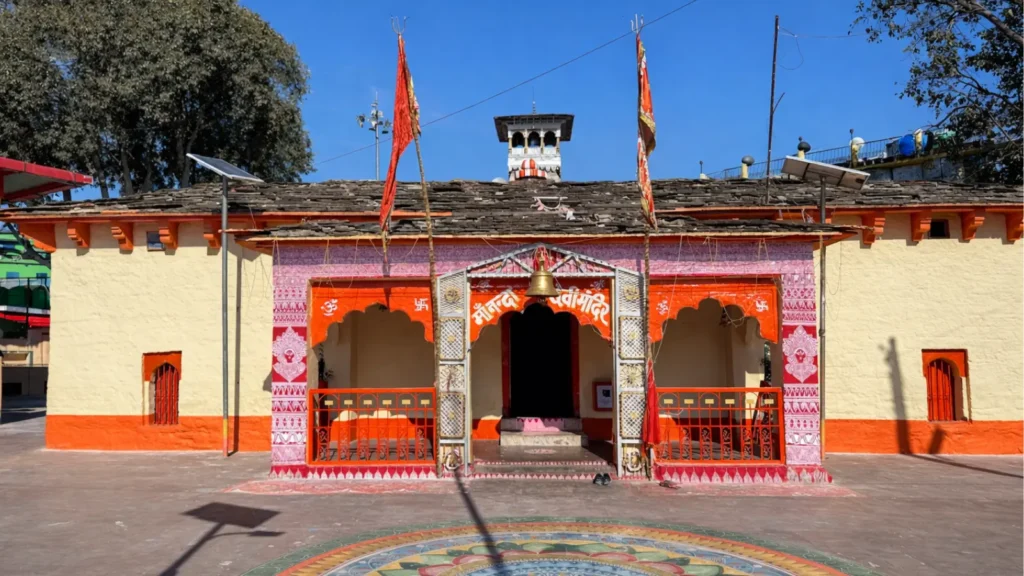
Uttarakhand, known as “Devbhoomi,” is a land of strength and peace that radiates from its heart. The Nanda Devi Temple, located in the beautiful hill station of Almora in the Kumaon region, is a unique symbol of its culture. This temple is not just a religious site, but also a confluence of centuries-old history, unique mythological stories, and unsolved mysteries that continue to amaze people even today.
In this article, we will discuss in detail how the Nanda Devi Temple became the heart of Kumaon and why thousands of people flock to the mountain heights to see it every year.
The Ancient History of the Nanda Devi Temple
The history of this sacred temple in Almora tells the tales of the kings of Uttarakhand and their famous battles. Historians date its main structure to the 9th century and attribute its construction to the kings of the Katyuri dynasty. The Katyuri kings considered Devi Nanda as their “Ishta Devi” or family deity.
However, the story of the construction of this temple in Almora dates back to the 17th century (around 1617 AD). Historians say that Raja Baz Bahadur Chand, the powerful ruler of the Chand dynasty, conquered the Junagadh Fort in Garhwal. As a victory gift, he respectfully brought the sacred idol of Devi Nanda, made of unburnt metal, to Almora. He installed it in his royal palace, Malla Mahal.
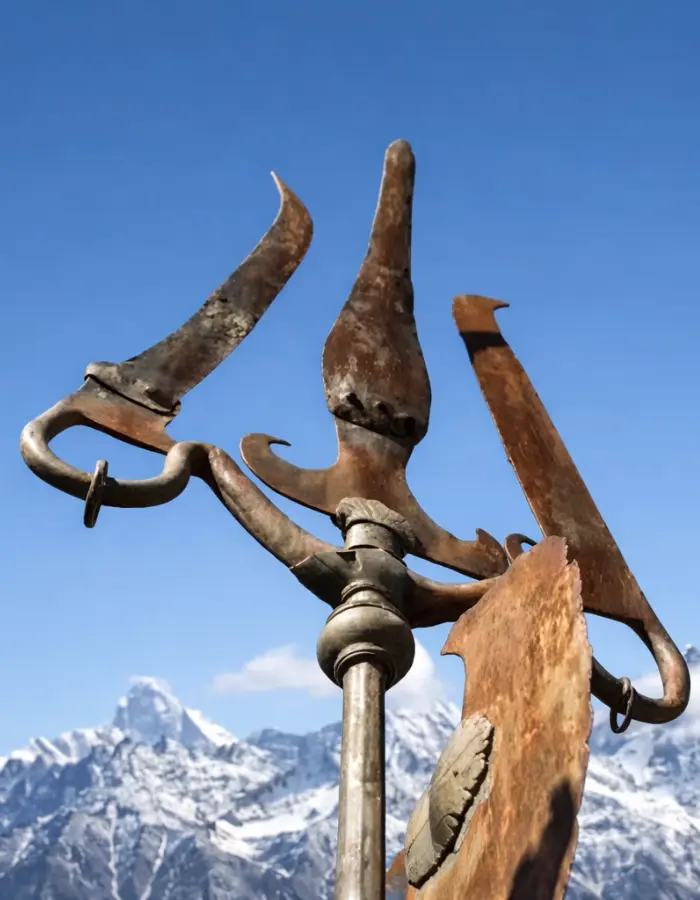
Time passed, and in 1815, during a fierce battle between the British and the Gorkhas, the palace, as well as the temple, suffered damage. Later, after the request of the people and some miraculous events, the authorities moved the idol to its present location (Near Lal Bazaar).Today, the temple displays a fine blend of Chand and Katyuri architecture.
Mythological Story: The Birth of Mother Nanda and Her Relationship
For the people of the Himalayas, Nanda Devi is not just a goddess (देवी), but a member of their all family. According to mythology, Nanda Devi is an incarnation of Goddess (देवी) Parvati.
Daughter of Himachal
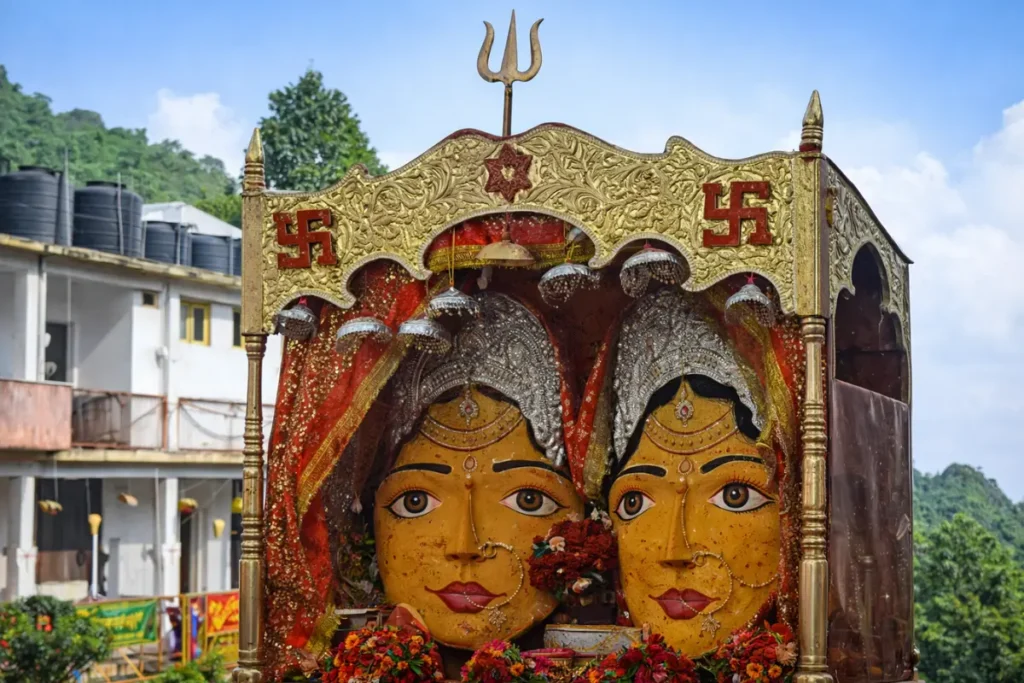
According to mythological stories, King Himavat (King of the Himalayas) had two daughters—Nanda and Sunanda. Nanda Devi was born on the eighth day of the bright fortnight of the month of Bhadrapada (भाद्रपद महीने के शुक्ल पक्ष की अष्टमी). Her birth filled the entire region with joy and happiness, hence her name “Nanda.”
Shiva and Nanda’s Relationship
Kumaon and Garhwali folk songs (called Jagar) tell of Nanda Devi’s marriage to Lord Shiva. However, she loved her maternal home (the Himalayan mountains) so much that she visited there often. In Uttarakhand, she is worshipped as “Dhiyani” (daughter of the home). When she leaves for her in-laws’ home (Mount Kailash), all of Uttarakhand bids her farewell like a daughter.
Divine Miracles: Commissioner Traill and the Power of Maa Ki Shakti
Many miracles have occurred at Maa Nanda’s court that have astonished even the greatest logicians. The most famous one dates back to 1832, when British Commissioner G.W. Traill was the administrator of Almora.
It is said that Traill had made some government changes to the temple’s courtyard, which the local people and priests were not happy with. During that time, when Traill went on a pilgrimage to Pindari Glacier, he suddenly lost his eyesight. When several treatments failed to yield any results, the pundits advised him to seek forgiveness from Maa Nanda. Traill promised to build a magnificent temple for the Mother Goddess. As soon as he made this commitment, his sight miraculously returned. This event is still considered a great testament to the divine power of the Nanda Devi Temple.
Architecture: A magnificent example of the Katyuri and Chand styles.
The temple’s architecture and craftsmanship are remarkable. It is built in the “Shikhar” style, a hallmark of ancient Himalayan temples.
- Stone Carvings: The temple walls are so intricately carved with deities, elephants, and beautiful flowers that one is left awestruck.
- Woodwork: Uttarakhand is known for its ancient woodwork. You’ll find ancient carvings on the temple’s doors and ceilings that remain intact even after centuries.
- Inner Sanctum Sanctorum: Inside the sanctum sanctorum, you will find the idols of Devi Nanda and Devi Sunanda, and priests redecorated every year during the festival.
Nanda Devi Festival: A Major Cultural Celebration
The Nanda Devi Fair, held annually in September (भाद्रपद), is Almora’s biggest attraction. During this time, the entire city is immersed in the colors of a festival.
- Worship of the Kadali Tree: The most significant feature of this fair is that artists carve idols of the goddess from sacred “kadali” (banana) trees. Priests perform several rituals when selecting these trees.
- Traditional Dances: Artists perform folk dances such as the ‘Choliya Dance‘ (Warrior Dance) and ‘Jhora-Chanchari‘ at the fair to showcase the heritage of Kumaon.
- Dola Procession: On the last day of the festival, the Devi Maa palanquin is taken out. Thousands of people take to the streets, chanting “Jai Maa Nanda“.
Nanda Devi Raj Jat Yatra: A Difficult Trial
Another important event associated with the temple is the ‘Raj Jat Yatra‘. This pilgrimage occurs once every 12 years and is also known as the “Himalayan Kumbh.”

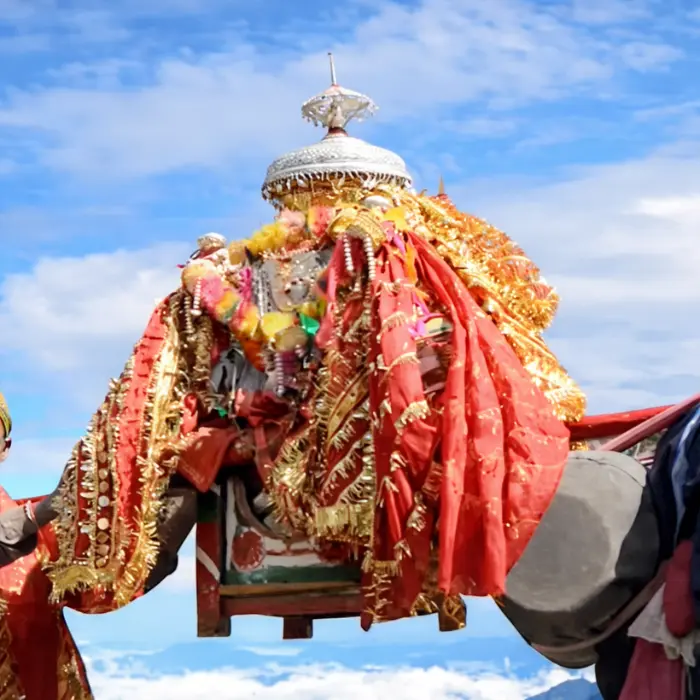
- 280-kilometer journey: Devotees begin from Nauti village in Chamoli and walk to Roopkund and Hemkund.
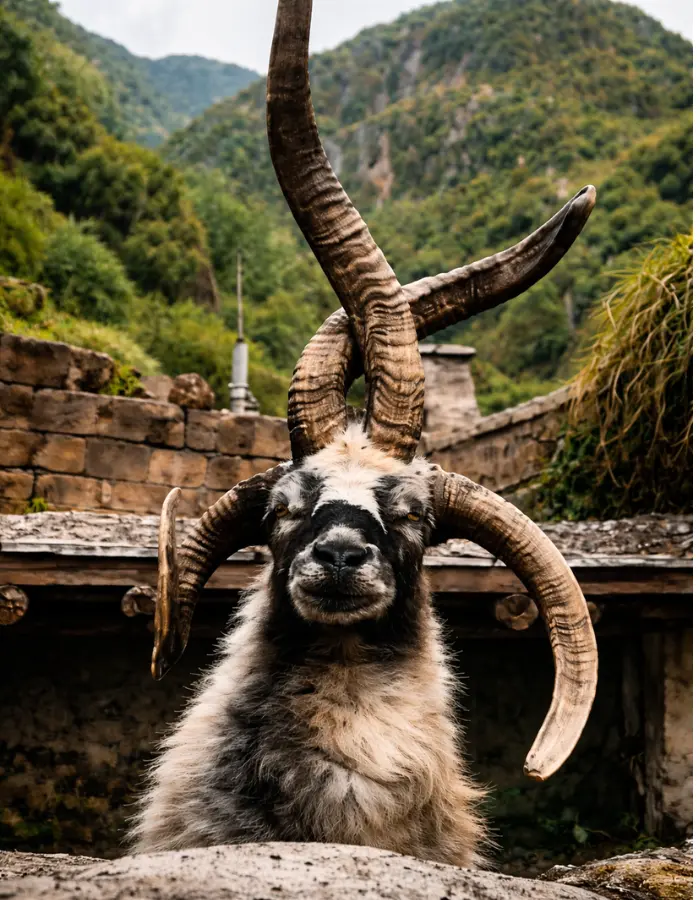
- Four-Horned Medha: In this pilgrimage, a four-horned bheda (चौसिंग्या खाडू) leads the way. It is believed to be the messenger of Goddess Nanda and ultimately continues alone.
- Unwavering Faith: The journey reaches an altitude of 17,000 feet above sea level. Despite the cold and low oxygen levels, devotees‘ faith remains unwavering.
Nearby Attractions: Places to Visit Near Almora
If you’re visiting the Nanda Devi Temple, be sure to visit these places:
- Kasar Devi Temple: This temple is famous worldwide for its magnetic energy. Swami Vivekananda meditated here.
- Jageshwar Dham: Located 35 km from Almora, it houses 124 ancient temples amidst dense pine trees.
- Chitai Golu Devta: Known as the “God of Justice.” Devotees hang their petitions along with bells here.
- Katarmal Sun Temple: This 800 year old, Sun Temple showcases amazing architecture That contrinues to captivate visitors.
Travel Guide: How to reach Almora?
Getting to Almora is easy and the route is full of greenery:
| Travel Mode | Details | Duration / Distance |
|---|---|---|
| By Road | Direct buses are available from Delhi to Almora. | 8–10 Hours |
| By Train | Nearest railway station is Kathgodam. From there, take a taxi to Almora. | 3 Hours (from Kathgodam) |
| By Air | Nearest airport is Pantnagar, located 115 km from Almora. | 115 KM |
Pro Tip: For more travel information and latest updates, you can check the official website of Uttarakhand Tourism.
Conclusion
Finally, the Nanda Devi Temple is not just a pilgrimage site, but an experience that brings peace to your mind. This temple connects us to our ancient traditions and centuries-old history. The purity of the air here and the tinkling of the clocks soothe every distressed mind. Maa Nanda’s grace has inspired us for centuries. If you want to please the true spirit of the Himalayas, So please attend Maa Nanda temple once.
FAQ’s
Ans. The kings built the main structure in the 9th century, but authorities moved to its current site in the 19th century.
Ans. According to mythology, they are sisters and daughters of King Himavat.
Ans. Visitors can take photographs of the exterior of the temple, but the temple administration prohibits taking photographs of the idols inside the sanctum sanctorum.
Ans. This fair starts every year on the day of Nanda Ashtami in the month of September (Bhadrapada).
Ans. Mall Road and the Kasar Devi area in Almora are the best places to stay; you’ll find hotels for every budget.