Table Of Content
Introduction
India is a land of villages, each carrying its own story, culture, and history. Among them, Mana Village Uttarakhand in Chamoli district stands out as the first Indian village, uniquely famous for its location near the Indo-Tibet border and its rich blend of mythology, legends, natural beauty, and spiritual significance.
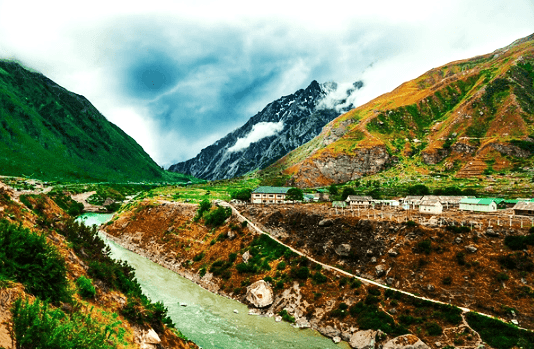
Located just 3 km from Badrinath Temple, Mana Village Uttarakhand, is surrounded by the mighty Himalayas, glaciers, and rivers. This settlement is not only scenic but also holds fascinating stories from the Mahabharata, caves where sages lived, and pathways where the Pandavas are believed to have walked on their journey to heaven.
The history of Mana is not just about dates or rulers, but about its deep connection with India’s epic traditions and Himalayan lifestyle.
Geographical Background of Mana Village Uttarakhand
- Altitude: About 3,200 meters (10,500 ft) above sea level
- District: Chamoli, Uttarakhand
- Nearby town: Joshimath (approx. 50 km away)
- Climate: Pleasant in summer, extremely cold in winter (villagers migrate downwards during snow season)
- Location significance: It lies at the base of the Mana Pass, once a historic trade route to Tibet.
Mana Village Uttarakhand is truly unique in its geography. Nestled at an altitude of about 3,200 meters, it is surrounded by majestic snow-covered peaks such as Neelkanth, whose towering presence adds to the village’s grandeur. Numerous glaciers in the region feed the rivers and streams that flow through the valley, creating an environment that feels like a natural fortress—protected on all sides by rugged mountains and icy landscapes.
The Saraswati River, with its swift and forceful current, originates from a nearby glacier and passes through Mana Village Uttarakhand, carving its way through rocks before finally merging with the Alaknanda River near Badrinath. This confluence is not only geographically striking but also spiritually significant, further enhancing the importance of Mana Village Uttarakhand as both a natural wonder and a sacred site.
Mythological of Mana Village
Mana is often called a mythological village, because almost every corner is connected with legends from the Hindu epics.
1. Bhim Pul – The Stone Bridge
According to ancient belief, when the Pandavas were making their final journey towards heaven, they had to pass through Mana. At this point, the mighty Saraswati River was flowing with such force that it became impossible to cross. Draupadi, weary and unable to overcome the roaring waters, found herself stranded. Seeing her struggle, Bhima, the strongest of the Pandava brothers, lifted a massive rock with his immense strength and placed it across the river. This natural stone bridge came to be known as Bhim Pul. Even today, the enormous rock rests firmly over the gushing Saraswati, allowing pilgrims and visitors to cross safely. To the devotees, it is not just a bridge but a divine creation, a symbol of Bhima’s strength and devotion, and they walk across it with reverence and faith, considering it a sacred blessing on their pilgrimage.
2. Vyas Gufa – Where Mahabharata Was Written
Among the many sacred sites of Mana, the Vyas Gufa holds a special place in Indian history and mythology. This ancient cave is believed to be the dwelling of Sage Ved Vyasa, the revered sage who composed the great epic, the Mahabharata. According to tradition, it was here that Ved Vyasa dictated the verses of the Mahabharata, while Lord Ganesha acted as his scribe, writing them down without pause. Inside the cave, visitors can still see a small shrine, idols, and a simple seating area, which together create an atmosphere of deep spirituality and reverence. The natural rock formations in the cave resemble pages of a script, further strengthening the legend of Vyasa’s monumental work. For pilgrims and travelers alike, stepping into the Vyas Gufa feels like stepping back in time, into the very place where one of the world’s greatest epics was born.
3. Ganesh Gufa – The Writer’s Cave
Not far from the sacred Vyas Gufa lies another revered cave known as Ganesh Gufa, closely tied to the same legend of the Mahabharata’s creation. According to tradition, when Sage Ved Vyasa decided to compose the great epic, he requested Lord Ganesha to be his scribe. Ganesha agreed, but with a condition—that Vyasa must recite the verses without pause. Vyasa, in turn, set his own clever condition—that Ganesha should fully understand each verse before writing it down. It is believed that in this very cave, Lord Ganesha sat patiently, inscribing the Mahabharata as Vyasa dictated from the nearby Vyas Gufa. Today, the cave houses a small shrine dedicated to Lord Ganesha, where devotees come to offer prayers before visiting Vyas Gufa. Together, these two caves stand as living reminders of the divine collaboration that gave birth to one of the world’s greatest epics, making them a significant spiritual stop for pilgrims in Mana.
4. Saraswati River and the Curse
The sacred Saraswati River has its visible origin near Mana, flowing with tremendous force through narrow gorges and rocky terrain. But unlike other rivers, Saraswati has a mysterious story attached to her presence here. According to local legend, when Sage Ved Vyasa was deeply immersed in composing the Mahabharata inside his cave, the thundering roar of the Saraswati disturbed his concentration. Irritated by the constant noise, Vyasa became angry and cursed the river. Obeying the sage’s command, the Saraswati is believed to have gone underground, disappearing into the rocks at Mana. It later re-emerges only to join the Alaknanda River at Keshav Prayag, near Badrinath. This unique phenomenon—where a mighty river seems to vanish into stone—adds to Mana’s aura of mystery and divinity. For devotees, Saraswati’s hidden flow is not just a geographical wonder but also a reminder of the spiritual power and legends that surround this ancient land.
5. Pandavas’ Last Journey – Swargarohini Path
One of the most profound legends connected with Mana is the tale of the Pandavas’ final journey. According to the Mahabharata, after ruling their kingdom, the Pandavas renounced worldly life and set out on their last pilgrimage toward the Himalayas. This path, which begins at Mana, is known as the Swargarohini Path, meaning “the way to heaven.” It is believed that the brothers, along with Draupadi, walked this sacred trail through the high mountains in their quest for salvation. One by one, each of them fell along the journey, unable to complete the ascent, until only Yudhishthira, the eldest Pandava, reached the heavenly gates alive, accompanied by a loyal dog who later revealed himself as Lord Dharma. The legend makes Mana not just a village but a gateway to eternity, where myth and geography merge. Even today, pilgrims look upon the Swargarohini route with reverence, believing it to be the divine pathway once tread by the heroes of the epic.
These stories make Mana not only historically but also spiritually significant.
Cultural Life of Mana Village
Mana is home to the Bhotia community, mainly belonging to the Marchha and Jad clans. Their culture is a blend of Himalayan traditions and Tibetan influence.
- Occupation: Earlier, people were involved in the Indo-Tibetan trade. Now they rely on farming, tourism, and handicrafts.
- Handicrafts: Women knit beautiful wool products like sweaters, shawls, and carpets, which are popular among visitors.
- Migration: During winters, most families shift to lower villages due to heavy snowfall. Only a few remain behind.
- Houses: Stone and wood houses, small but warm, designed to withstand the Himalayan cold.
- Festivals: Villagers participate in Mata Murti ka Mela and rituals of Badrinath Temple.
Despite modernisation, the people of Mana have kept their ancient lifestyle and customs alive.
Sacred Places Around Mana
Mana is surrounded by many spiritual and natural attractions:
- Vyas Gufa – Legendary cave of Sage Vyasa.
- Ganesh Gufa – Cave of Lord Ganesha.
- Bhim Pul – Natural bridge built by Bhima.
- Saraswati River – Holy river that flows with great force.
- Vasudhara Falls – 400 ft tall waterfall; locals believe only pure-hearted people can enjoy its beauty.
- Satopanth Lake – A triangular high-altitude lake, associated with Brahma, Vishnu, and Mahesh.
- Charan Paduka – A rock believed to bear the footprints of Lord Vishnu.
- Neelkanth Peak – Known as the “Queen of Garhwal”, visible from Mana.
Natural Beauty and Trekking Routes
Mana is a paradise for nature lovers. Some popular treks and spots include:
- Vasudhara Falls Trek (5 km) – Easy trek, very scenic.
- Satopanth Lake Trek (19 km) – High-altitude, challenging but rewarding.
- Swargarohini Trek – Sacred route believed to lead to heaven.
- Mana Pass Trek – Restricted for civilians, but historically important.
The surroundings are filled with lush meadows, glaciers, waterfalls, and snow-capped peaks, making it an adventure destination too.
Modern Recognition of Mana Village
- Mana is declared a “Tourism Village” by the Uttarakhand government.
- It is officially marked as the “First Indian Village”, instead of “Last Village”.
- Under the Swachh Bharat Abhiyan, Mana was awarded for being clean and well-maintained.
- Homestays and guesthouses are now available, though simple in facilities.
Importance for Tourism
Mana attracts three types of visitors:
1. Pilgrims – visiting Badrinath and sacred caves
Mana holds immense religious value for pilgrims. Being just a few kilometers from the famous Badrinath Temple, it is often visited as part of the sacred journey. Devotees also explore nearby mythological sites such as Vyas Gufa, Ganesh Gufa, Bhim Pul, and the origin of the Saraswati River, which are linked to stories from the Mahabharata. For pilgrims, Mana is not just a village but a holy destination where faith, legends, and nature come together.
2. Trekkers – exploring Satopanth and Vasudhara
For adventure seekers, Mana serves as the base for some breathtaking Himalayan treks. The trail to Satopanth Lake, a high-altitude glacial lake considered sacred, offers stunning views of snow-clad peaks like Neelkanth, Chaukhamba, and Balakun. Another popular trek is to Vasudhara Falls, a magnificent waterfall cascading from 122 meters, believed to bless only the pure-hearted. These routes combine natural beauty with spiritual legends, making them a favorite for trekkers who wish to experience both adventure and divinity.
3. History and culture lovers – learning about Mahabharata links
Mana is a living museum of legends from the Mahabharata. History and culture enthusiasts visit to see places tied to epic tales—Vyas Gufa, where Ved Vyasa composed the Mahabharata; Ganesh Gufa, where Lord Ganesha served as his scribe; and Bhim Pul, built by Bhima for Draupadi. The Swargarohini Path, believed to be the Pandavas’ final route to heaven, further deepens the village’s mythical aura. For those fascinated by India’s heritage, Mana offers a rare opportunity to experience epic history woven into real landscapes.
Its combination of spiritual aura, natural charm, and cultural heritage makes it a unique destination.
Read More About :- Uttarakhand
🏔️ Conclusion
Mana Village is more than just the “first Indian village” near the Indo-Tibet border—it is a living tapestry of mythology, culture, and natural beauty. From the roaring Saraswati River and the legendary caves of Vyasa and Ganesha, to the sacred Swargarohini path walked by the Pandavas, every corner of Mana resonates with timeless stories. Its serene landscapes, snow-capped Himalayan peaks, and crystal-clear streams make it a paradise for trekkers and nature lovers, while its deep-rooted legends and proximity to Badrinath make it a revered destination for pilgrims. The Bhotia community’s traditions, handicrafts, and simple Himalayan lifestyle further enrich its charm.
Mana is not just a place to visit—it is an experience that blends spirituality, adventure, and history into one unforgettable journey. For anyone seeking to connect with India’s cultural soul and Himalayan grandeur, Mana stands as a sacred doorway to both the past and the divine.
FAQs
Ans. Mana is the last village on the Indian side near the Indo-Tibet border. To give it a positive identity, the government officially declared it as the “First Indian Village.”
Ans. Mana is only about 3 km from the Badrinath Temple, making it an easy extension for pilgrims and tourists.
Ans. The ideal time is May to October, when the weather is pleasant. In winter, the area gets heavy snowfall and villagers migrate to lower regions.
Ans. Major attractions include Vyas Gufa, Ganesh Gufa, Bhim Pul, Saraswati River, Vasudhara Falls, Satopanth Lake, and Swargarohini Path.
Ans. Yes. Mana has small homestays and guesthouses with basic facilities, offering visitors a chance to experience the village lifestyle.