Introduction
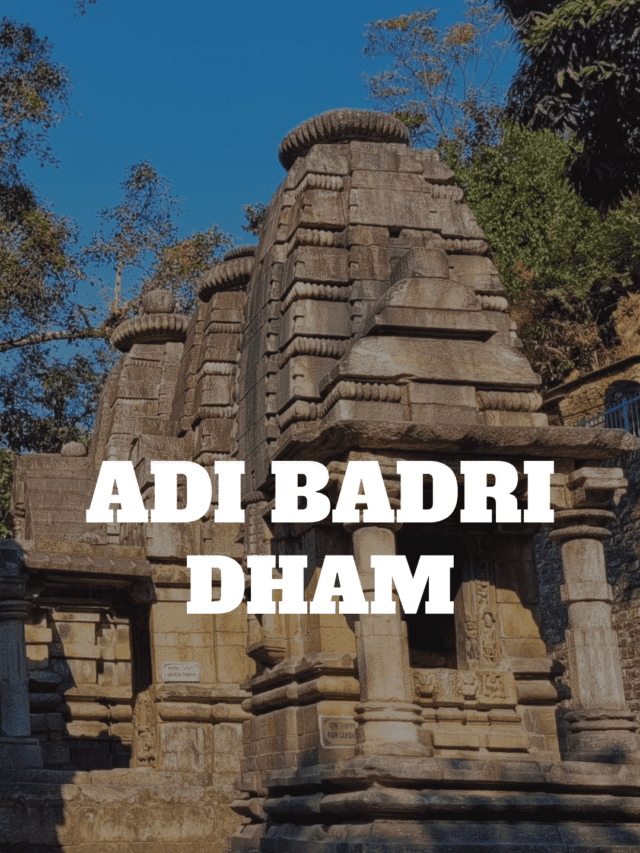
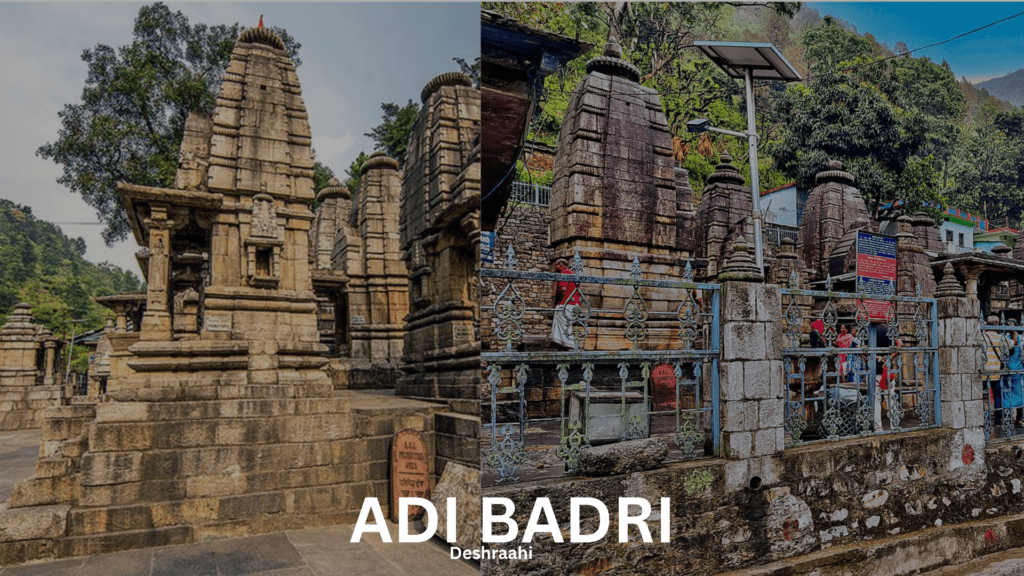
Adi Badri Temple, Uttarakhand, also known as Chandrapurgarhi, is an ancient and tranquil place in the Chamoli district of Uttarakhand. This sacred site is primarily known for the Adi Badri Dham temple complex, which represents the early stages of the Badrinath tradition dedicated to Lord Vishnu. Unlike many popular pilgrimage sites, Adi Badri Temple localises the Himalayan culture.
Moreover, Adi Badri is not just a religious site, but also an important administrative tehsil with a rich historical background. According to the Uttarakhand Tourism Department, Adi Badri Temple, Uttarakhand, is recognised as a key destination within the Panch Badri circuit. It is easily accessible throughout the year, which is why devotees would visit this region even when reaching the higher Himalayan pilgrimage sites was difficult. Consequently, Adi Badri gained lasting spiritual significance and continues to attract travellers today who seek history, faith, and simplicity all in one place.
Location and Geography
Geographically, Adi Badri is located in the Chamoli district of the Garhwal region of Uttarakhand. Administratively, it functions as a tehsil (sub-district), with its headquarters officially recorded as Helisera in revenue documents. As a result, the area lies at an altitude of around 1,800 meters above sea level, which ensures pleasant weather conditions for most of the year.
Additionally, Adi Badri is located about 25 km from Karnaprayag, on the route connecting Garhwal to Dwarahat in Kumaon. Due to this strategic location, the area has developed into a cultural link between the two regions. Surrounding it are forested hills, terraced fields, and traditional villages, creating a tranquil rural atmosphere. Nearby attractions such as Benital Lake further enhance the natural beauty of the region.
Meaning and Origin of the Name Adi Badri
Adi Badri holds profound historical and religious significance. The word “Adi” means original or ancient, while “Badri” refers to Lord Vishnu, who is worshipped in the form of Badri in the Himalayas.
Because this region housed the oldest temples of the Badri tradition, people began referring to it as Adi Badri, meaning the original Badri. Furthermore, the entire area is part of the sacred Badrikshetra, which further strengthens its religious identity. Over time, Adi Badri became the foundation of Vishnu worship in this part of Uttarakhand.
Adi Badri and the Panch Badri Tradition
Adi Badri holds a special place among the Panch Badri, or the five sacred Badri temples of Uttarakhand. These include:
- Adi Badri
- Vishal Badri (Badrinath)
- Vriddha Badri
- Yogdhyan Badri
- Bhavishya Badri
Among these, Adi Badri is considered the oldest. In ancient times, when the route to Badrinath was closed due to heavy snowfall, devotees would worship here. Therefore, Adi Badri remained a major centre of Vishnu worship for a long time. Even today, pilgrims value this place for its serene atmosphere and spiritual significance.
Adi Badridham Temple Complex
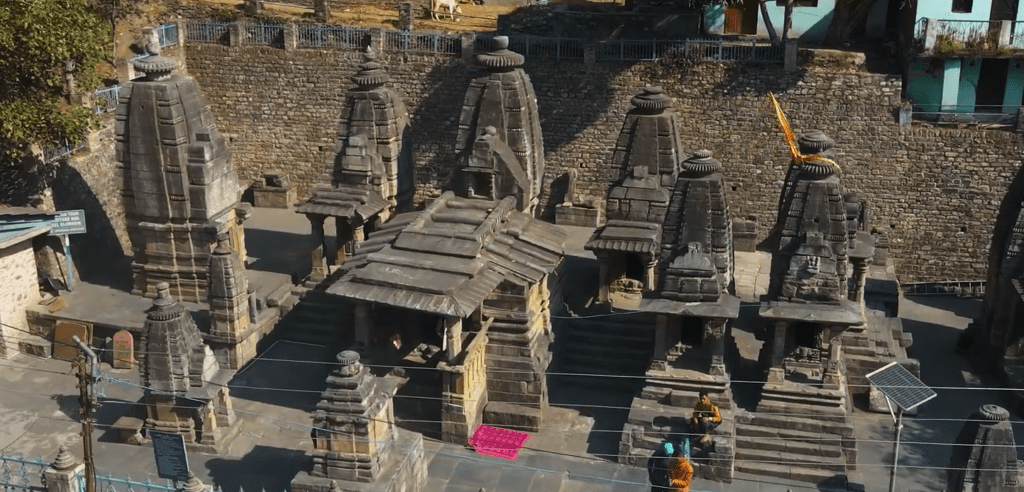
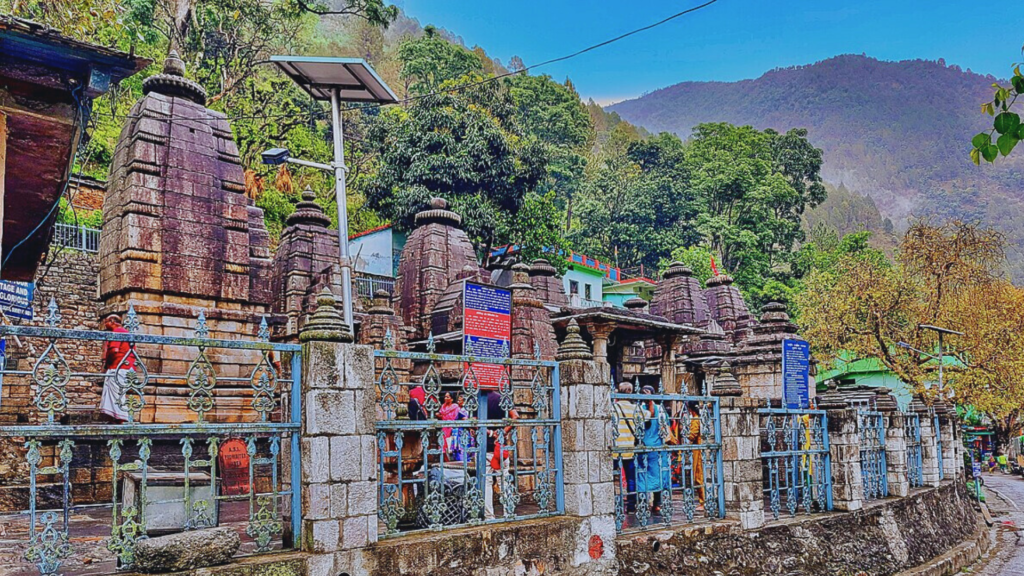
The Adi Badridham temple complex is the spiritual center of this region. Originally, the complex had 16 temples, although only 14 remain today. These temples were built between the 8th and 12th centuries, indicating that this site remained important for many generations.
Main Vishnu Temple
The main shrine honors Lord Vishnu. Inside the sanctum:
- The idol is carved from black stone
- The statue stands about three feet tall
- The form reflects early classical Hindu iconography
Priests follow simple and traditional worship practices here. Consequently, the temple maintains a peaceful and focused spiritual environment.
Other Shrines
Besides the main Vishnu temple, the complex includes shrines dedicated to:
- Lakshminarayan
- Gaurishankar
- Annapurna
- Surya
- Satyanarayan
- Ganesha
- Shiva
- Garuda
- Durga
- Janki
Together, these shrines clearly demonstrate that Adi Badri functioned as a multi-deity worship centre, reflecting a practice common in early Hindu religious traditions.
Architectural Significance
The temples at Adi Badri display early Nagara-style architecture. Craftsmen used locally available stone and focused on strength and balance rather than heavy decoration. As a result, the structures appear simple yet spiritually powerful.
Key architectural features include:
- Modest shikhara designs
- Solid stone masonry
- Compact sanctum spaces
Historians associate the earliest construction with the Gupta period, while later rulers added minor modifications. Even after centuries of exposure to weather, the temples remain stable, which highlights the skill of ancient builders.
Adi Badri – History and Significance
Near Adi Badri stands Chandpurgarh Fort, an important historical landmark. This fort served as the first capital of the Panwar kings of Garhwal. Until the mid-15th century, rulers governed the region from this location.
Later, the capital shifted to Dewalgarh, then Srinagar, and finally Tehri. Because of this history, Chandpurgadhi adds political and cultural significance to Adi Badri, making the area important beyond its religious value.
Adi Badri Tehsil and Local Life
The government officially created Adi Badri tehsil in 2014. Since then, it has served as the administrative center for 69 nearby villages. Most residents depend on agriculture, forestry, and small-scale animal husbandry for their livelihood.
The tehsil includes five pattis: Adi Badri, Kanswa, Dewalkot, Mathar, and Silpata. Each patti has a Patwari, who manages revenue records and local administrative duties. As a result, Adi Badri plays an important role in regional governance.
How to Reach Adi Badri Temple
Reaching Adi Badri is convenient with proper planning.
By Air
The nearest airport is Jolly Grant Airport, Dehradun. From there, travelers can hire taxis to reach Karnaprayag and then continue towards Adi Badri.
By Train
Specifically, Rishikesh railway station serves as the nearest major railhead. After reaching Rishikesh, visitors can continue their journey by bus or taxi via Devprayag and Karnaprayag.
By Road
Road connectivity remains reliable throughout the year. Travelers can follow the route: Rishikesh → Devprayag → Karnaprayag → Adi Badri.
Upcoming Railway Line
The upcoming Rishikesh–Karnaprayag railway project will further improve accessibility. Once operational, Adi Badri will lie only 16 kilometers from the nearest railhead.
Best Time to Visit
- March to June offers comfortable weather and clear views.
- September to November provides fresh landscapes after the monsoon.
- Winter months remain cold but peaceful, ideal for quiet visits.
However, travelers should exercise caution during the monsoon due to slippery roads.
Read More:- Badrinath Dham Complete Travel Guide
Conclusion
Overall, Adi Badri Temple Uttarakhand offers a unique blend of ancient history, spiritual depth, and peaceful surroundings, making it a meaningful destination for visitors. As one of the oldest centres of the Badrinath tradition and an important part of the Panch Badri circuit, it holds deep spiritual significance. Moreover, its rustic charm and nearby historical sites together create a peaceful and memorable travel experience.
Overall, Adi Badri is the perfect destination for travelers who appreciate authenticity over crowds. Whether one visits for devotion, history, or simply a peaceful retreat, this place leaves a lasting impression with its simplicity and timeless character.
FAQ’s
Ans. Additionally, Adi Badri Temple is located in the Chamoli district of Uttarakhand, about 25 kilometres from Karnaprayag, along the route towards Dwarahat in the Garhwal region.
Ans. Adi Badri is called “Adi” Badri because it is believed to be the earliest centre of Vishnu worship in the Badri tradition, predating the present-day Badrinath temple.
Ans. The Adi Badri complex originally consisted of sixteen temples. Today, fourteen temples remain, all dedicated to Lord Vishnu and other associated deities.
Ans. The best time to visit Adi Badri Temple is from March to June and from September to November, when the weather is pleasant an,d road conditions are favourable.
Ans. Yes, Adi Badri is an important part of the Panch Badri circuit, which includes five sacred Vishnu temples associated with Lord Badri in Uttarakhand.